Wu Qin Xi Common Mistakes: The Corrections That Change the Movement
Key Takeaways
- The official Wu Qin Xi teaching material lists thirty-one paired errors and corrections across the twelve movements, and nearly every one of them is measurable.
- Most of them fall into a few recurring families: skipping a shape process, putting the weight in the wrong place, folding the spine instead of leading it from the waist, and keeping the shoulders level when they should move.
- Learn the numbers and the errors become obvious: the front foot abducts to at least 90 degrees, the stance is about 20 cm wide, the back heel turns in 30 to 40 degrees, the step is never longer than your own foot, and the forward lean is about 45 degrees.
- Bear rolling must be passive. The hands follow the movement of the waist; if the hands are driving the circle, the waist has stopped working.
- Bear swaying starts by lifting the hip, then the knee. The foot falls because the weight moves, not because you stamp it down.
- If you do one thing: film the deer gallop from behind and check the round back and the depth of the belly.
Written by Master Mingde Chen, 12th Generation Chen Style Tai Chi Inheritor Reviewed by Dr. Jing Li, PhD in Biomechanics, Chief Technical Consultant at Wuji Taichi
Almost every qigong error book tells you what a movement looks like. Very few tell you what it looks like when it is wrong, and what to change. The official Wu Qin Xi (五禽戏) teaching material does the opposite: it works through the set as a list of paired errors and corrections, thirty-one of them, and it attaches hard numbers to many of them.
That makes this a different kind of page from a how-to guide. It is a checklist you can work through section by section — and the numbers at the end let you check yourself without a teacher.
If you are new to the set, read Wu Qin Xi for Beginners first for the movements themselves, then use this page as your correction reference.
Why Corrections Matter More Than Counts
Most movement training fails in the same way: the practitioner can count the repetitions but not see the fault. In Wu Qin Xi this matters more than usual, because the fault is usually a loss of the waist action. Once the torso stops driving and the limbs take over, the movement still superficially resembles the form but the training effect is gone.
The corrections below share a pattern: almost all of them restore something that should be passive or driven from elsewhere — the feet should be lifted by the hip, not stepped; the hands should be carried by the torso, not circling on their own; the elbow should be straightened by the shoulder, not pulled.
The Preparation (预备势)
Mistake: the feet turn out like a duck stance, with the heels together or the feet narrower than the shoulders. This is more than untidy — in traditional practice it is said to close the perineum and interfere with the circulation of the two major channels.
Correction: lift the left foot by the heel first and follow with the toes; land toe first and then the heel; let the heel fall slightly outward. Keep the feet parallel and a little wider than the shoulders — roughly shoulder width between the inner edges.
Raising the Tiger (虎举)
Mistake 1: the hands go straight from open palm to fist. The claw shape is skipped entirely, which is where most of the hand work lives.
Correction: press the palms down with the fingers spread, curl the first two finger joints into a claw, then rotate into a fist starting at the little finger and working through to the thumb. The rotation is slow and deliberate.
Mistake 2: the elbows bend as the hands rise overhead.
Correction: straighten the elbows completely and hold them there, as if supporting a heavy weight above you, and keep them straight through the rotation back into fists.
Mistake 3: the elbows swing outward as the fists are pulled down, and the fists close in toward each other.
Correction: bend the elbows forward and draw the fists down so the forearms stay vertical, keeping the fists shoulder-width apart the whole way.
Pouncing the Tiger (虎扑)
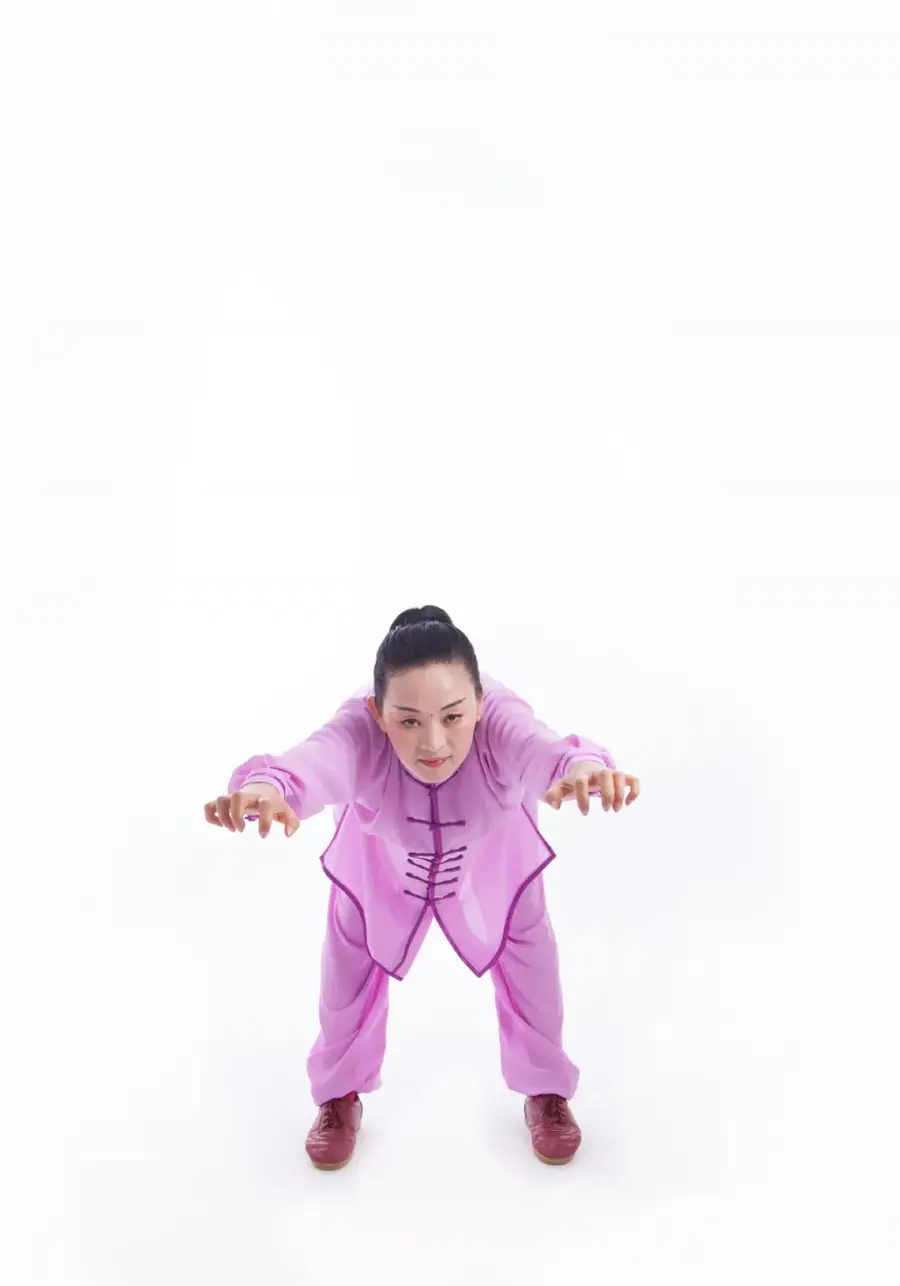
Mistake 1: the head drops and the back rounds during the pounce, the gaze goes to the floor, and the shoulders rise above the hips and hands.
Correction: keep the eyes on the hands from the moment they lift. Straighten the back, let the lower back dip and the hips press backwards, and pause at the point where hips, shoulders and hands are level.
Mistake 2: in the pounce onto the front leg, the weight moves onto the front leg and both arms and the front leg straighten completely.
Correction: the step is no longer than your own foot; the weight stays over the rear leg; the torso leans forward about 45 degrees; the front knee is slightly bent with the toes lightly lifted; the elbows stay softly bent in an arc.
Mistake 3: both pounces are performed identically.
Correction: they are different. Pouncing from a straight, wide stance: lift the torso and bring the fists up in front of the head, then change to claws and pounce down. Pouncing from the empty stance: bend forward, bring the fists to the shoulders, then step the foot and shift the weight.
Mistake 4: the breathing transition after each animal is performed the same way as the opening.
Correction: in the opening transition, both hands lift forward. In the transition after each animal, both hands lift forward and outward to the sides.
Deer Stamping (鹿抵)
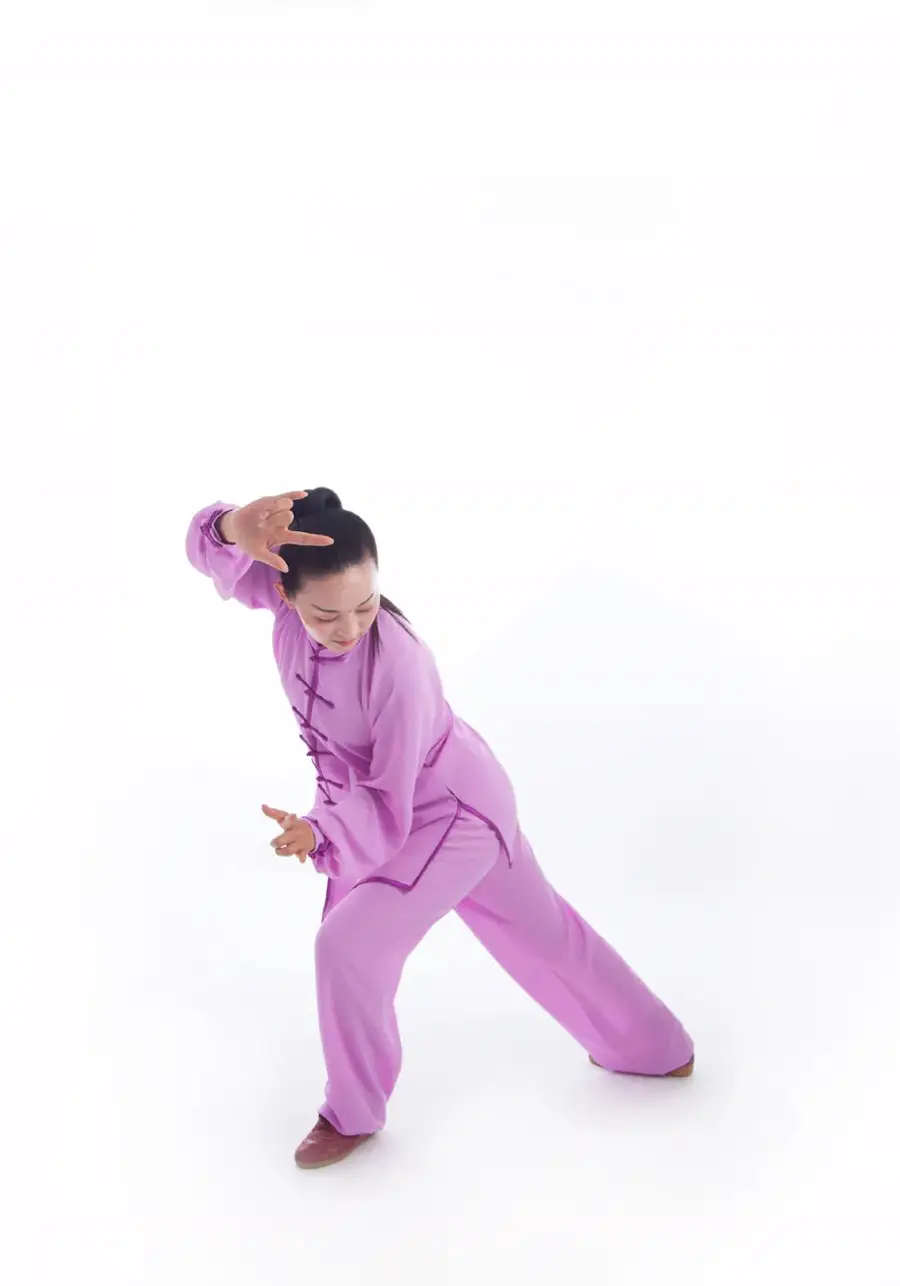
Mistake 1: the step lands in the wrong direction or at the wrong distance, so the side bend cannot develop and you cannot see your back heel.
Correction: with the weight on the right, lift the left foot and step forward and slightly across, landing the heel about one foot-length beyond the toe of the foot you started from.
Mistake 2: the front toes turn outward less than 90 degrees, which makes the stance unstable.
Correction: turn the front toes outward to at least 90 degrees, so the rear foot cannot land on the same line as the front one.
Mistake 3: to see the back heel, the back heel rolls inward or lifts off the floor.
Correction: shift the weight onto the front leg, turn the front toes out, straighten the back leg and keep the whole back foot flat. Increase the rotation through the waist and abdomen instead.
Mistake 4: the foot is drawn in and the hands trace a small diagonal arc back to the front.
Correction: while the weight shifts back, the elbow stays against the waist and that arm extends fully to the side; when the foot returns to the open stance, the hands travel up and over the head in a large vertical circle before settling in front.
Deer Galloping (鹿奔)
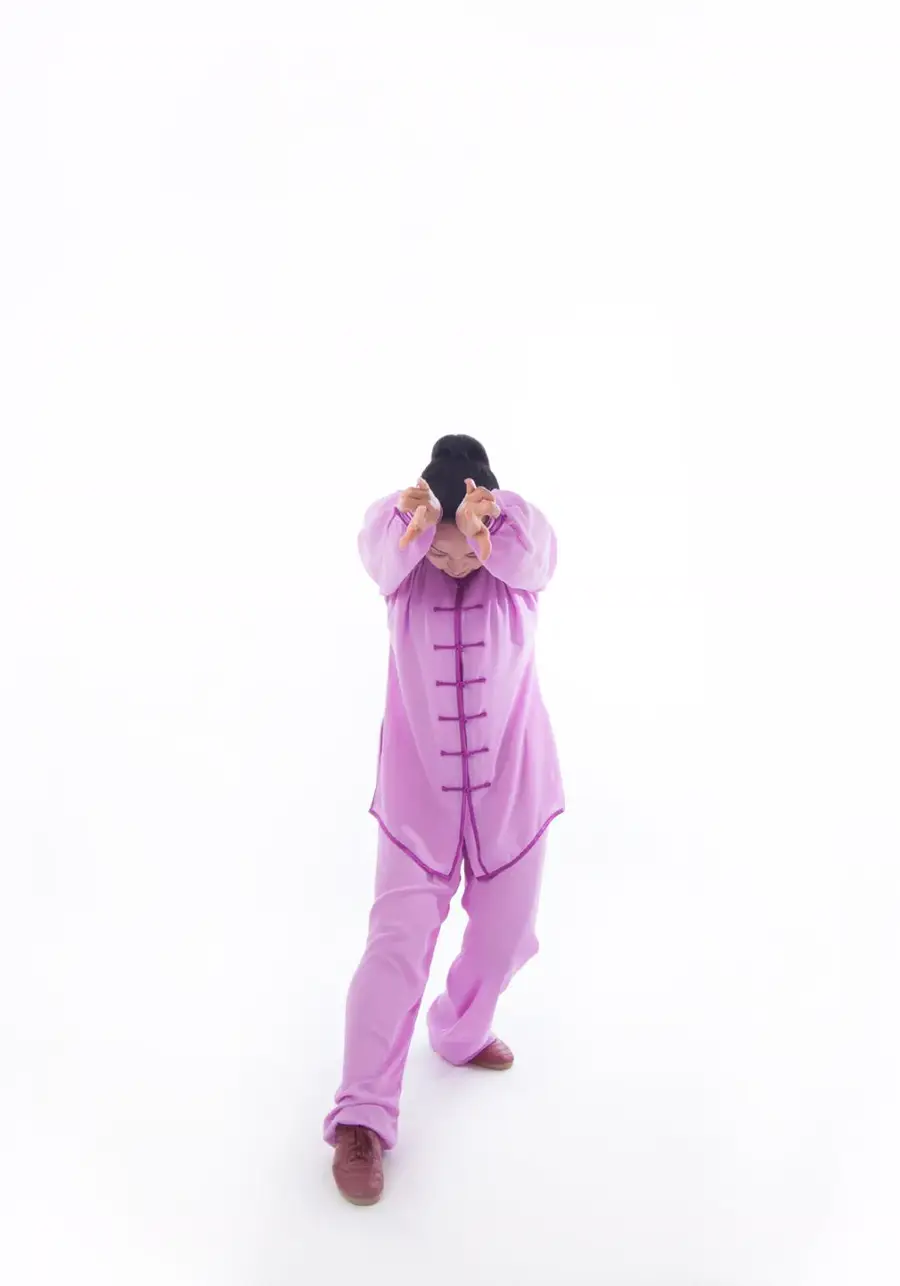
Mistake 1: after landing, the feet sit almost on one line and the body sways side to side.
Correction: land toward the same-side shoulder, set the feet about 20 cm apart across, and before sitting back let the back heel close inward by 30–40 degrees.
Mistake 2: the back arches and the hips tilt up during the sit-back, so the vertical bow never forms. The usual cause is stepping too far.
Correction: lift the foot high and land it close — the step up is shorter than your own foot. Then draw the back backwards, pull the abdomen in, contain the chest, and draw the hips forward so the lower back protrudes.
Mistake 3: the arms stay straight and reach forward, so the horizontal bow is invisible.
Correction: lower the head, round the back and draw the abdomen in while rotating both arms inward and bending the elbows slightly out to the sides. From behind, the shoulder blades should visibly draw together into a round back.
Bear Rolling (熊运)
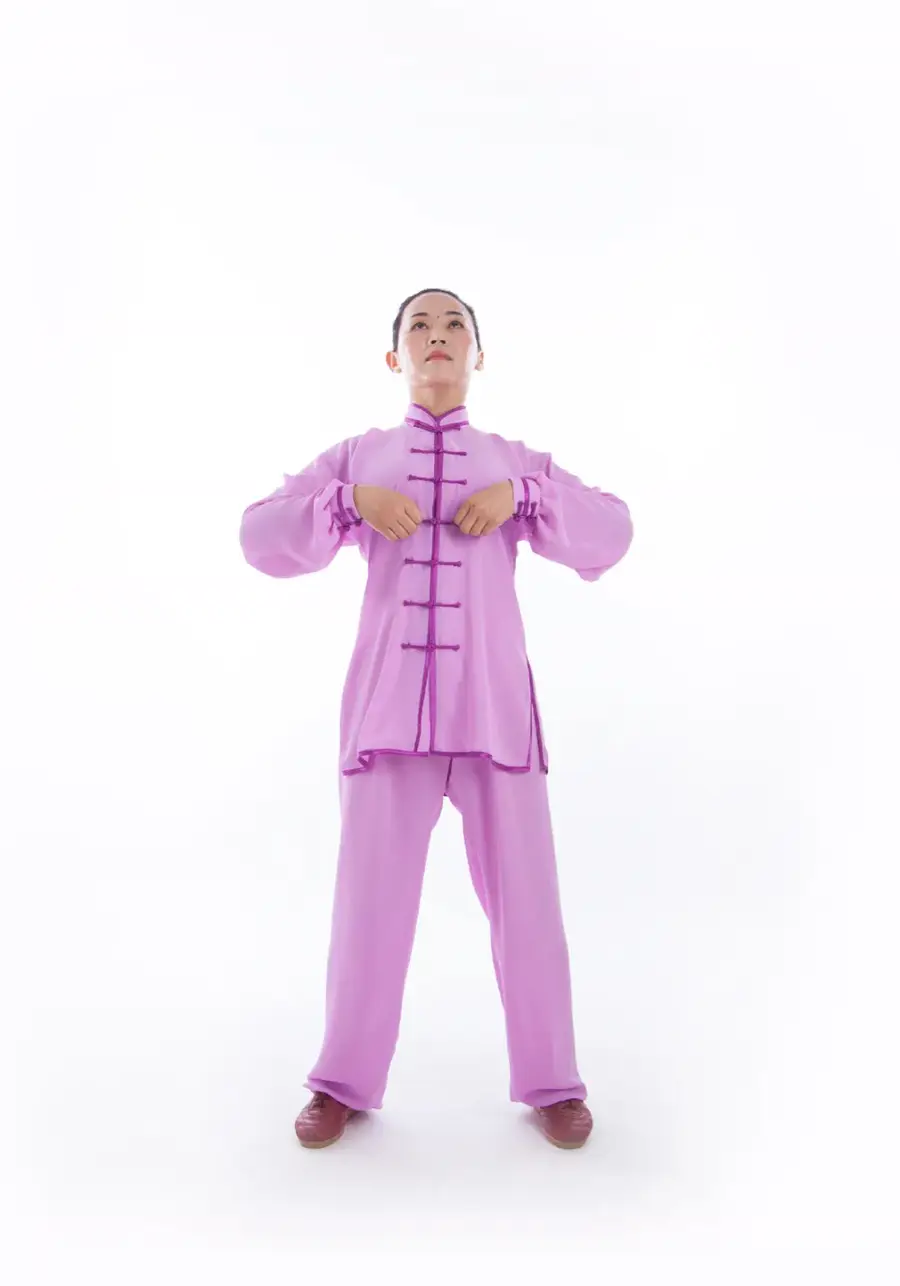
Mistake 1: the hands press tight against the abdomen and barely move while the body rocks.
Correction: the hands hover over the surface of the lower belly and travel passively with the torso, circling the navel. The circle is small — about 10 cm across, with the elbow angle closing under 90 degrees above the navel and opening past 90 degrees below it.
Mistake 2: the torso stays still and the hands circle actively, rubbing the belly like a massage.
Correction: let the hips stay fixed and let the waist and abdomen do the moving; the hands are carried. Relaxed shoulders are the key — that is what lets the weight of the arms hang and travel.
Bear Swaying (熊晃)
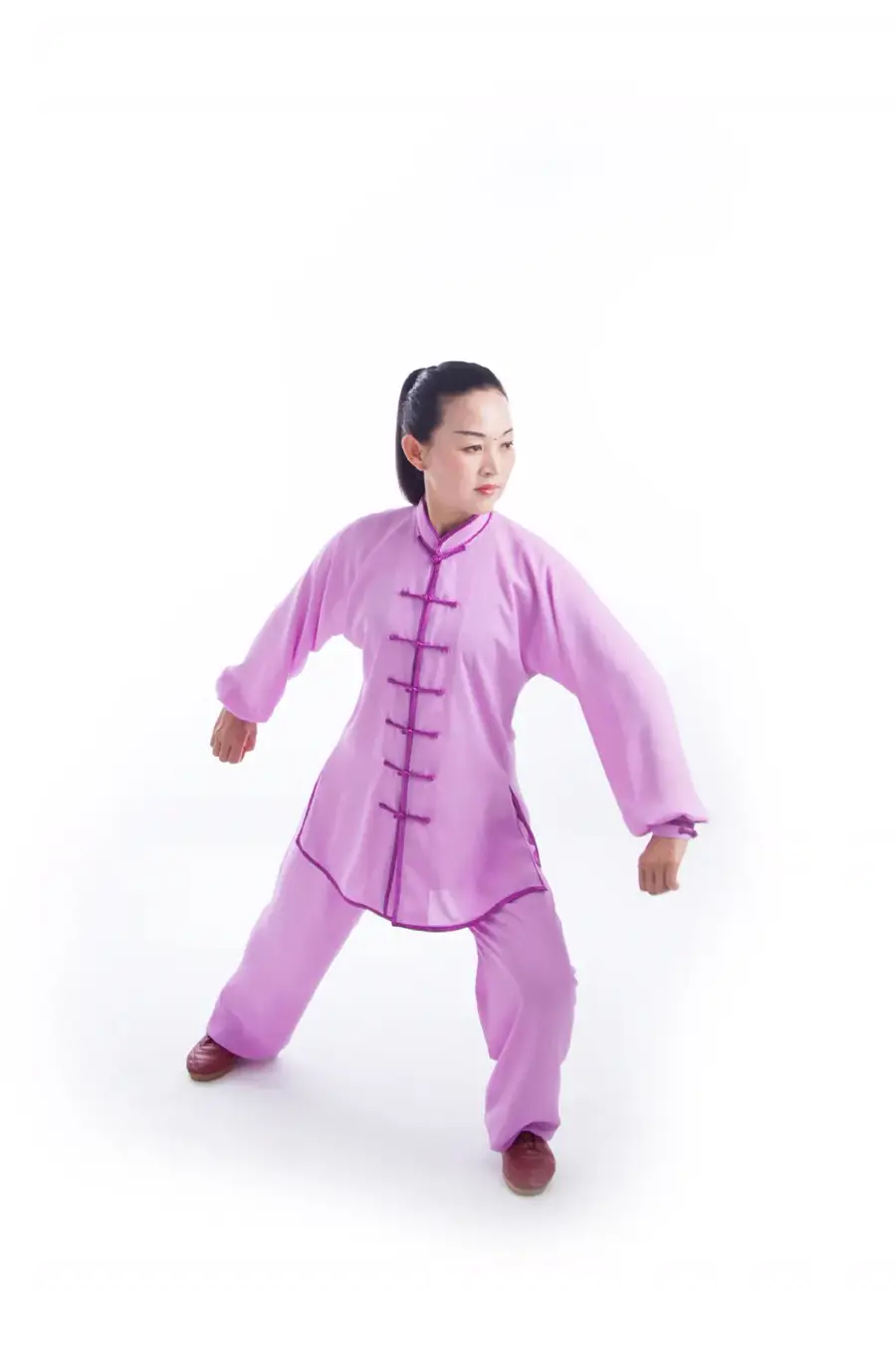
Mistake 1: no hip lift at all — the knee bends and the leg steps out directly.
Correction: lift the hip first and let it carry the foot off the floor, then bend the knee. During the lift the knee and ankle are completely relaxed, the seat follows the hip, and the thigh and toes hang low.
Mistake 2: the foot lands heel first and then deliberately stamps to create a shock; the shock stays in the foot.
Correction: shift the weight first and let the foot fall with it, landing the whole foot at once so the jolt travels up through the hip joint. It is a settle, not a stamp.
Mistake 3: the step is too large, the feet fall into a narrow duck stance, and the toes point up.
Correction: drop the foot rather than reaching it out — relax the ankle before landing so the toes hang low. Land wider than the shoulders across, and no more than half a foot forward or back.
Mistake 4: the arms swing but both shoulders stay level throughout.
Correction: work the waist and shoulders together — twist the waist and sway the shoulders, the front shoulder sinking and the rear shoulder rising, so the ribs open and close.
The Side-Raise Transition (侧举调息)
This transition appears four times in the set and is often treated as a rest. It is not: it resets the breathing and the focus for the next animal. Hands lift forward and upward to about shoulder height with palms up and soft elbows, then lower — inhale on the lift, exhale on the lower. Keep it continuous and even rather than hurried, and use it as the moment to release tension in the shoulders before the next animal.
Ape Raising (猿提)
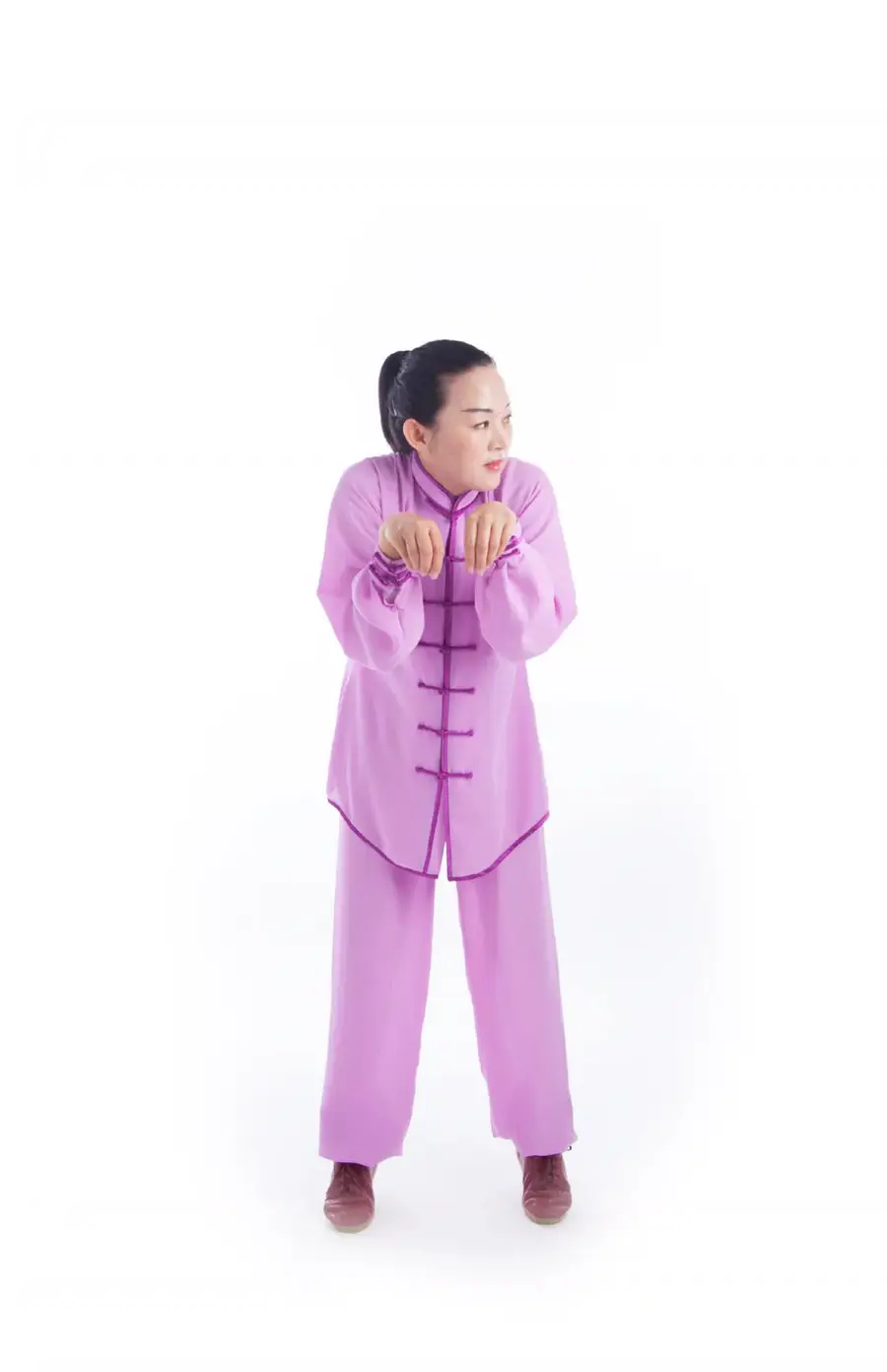
Mistake: the heel lifts and the balance wobbles, the shoulders do not rise enough to curl the torso, the fingers pinch into the hook too slowly, the weight shift breaks sequence, and the curl is shallow.
Correction: lift the heels and shrug the shoulders together, then fold the wrists. The order for shifting the weight upward is shrug, draw the abdomen, lift the heels, turn the head. The curl centres on the upper chest: shrug, tuck the chin, contain the chest, round the upper back, bend the elbows and lift the wrists, with the upper arms against the ribs so the elbows do not wing outward. The hook is formed quickly, and the gaze travels up to the raised hook.
Ape Reaching (猿摘)
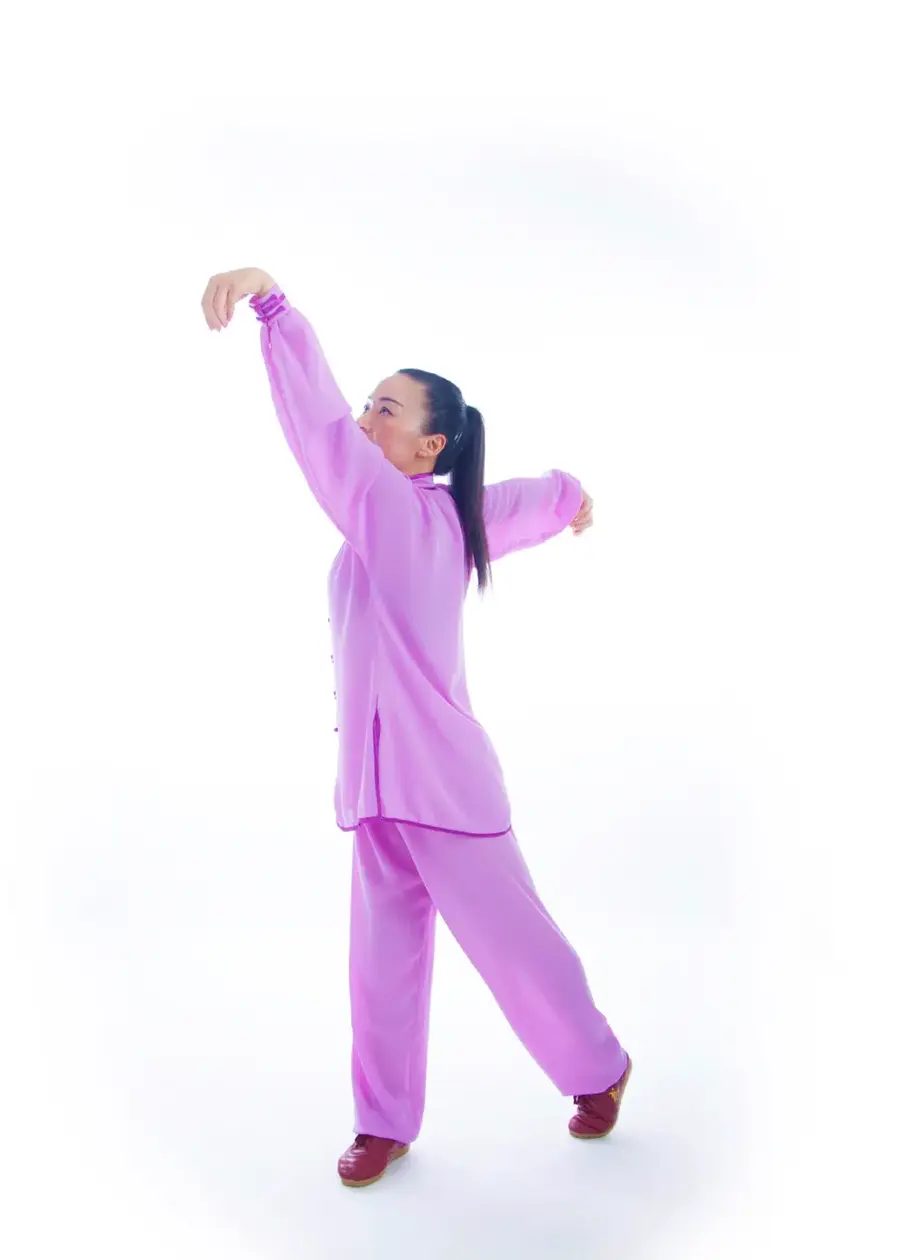
Mistake 1: the arms and legs work at different times instead of together.
Correction: three things happen together in this movement. The foot withdraws as the weight settles and the head turns; the reaching leg extends as the arm lengthens and the gaze lifts; the foot returns as the arm folds in and the gaze drops to the hand.
Mistake 2: the hook changes shape at the wrong moment, and the reach goes straight up rather than along an arc.
Correction: the hook travels from behind, up and over, into a position above and in front of the head — the flick of the fingers and the flick of the wrist happen together and quickly, and the eyes follow the hook. The turning arc of the upper body works through 135 degrees.
Bird Stretching (鸟伸)
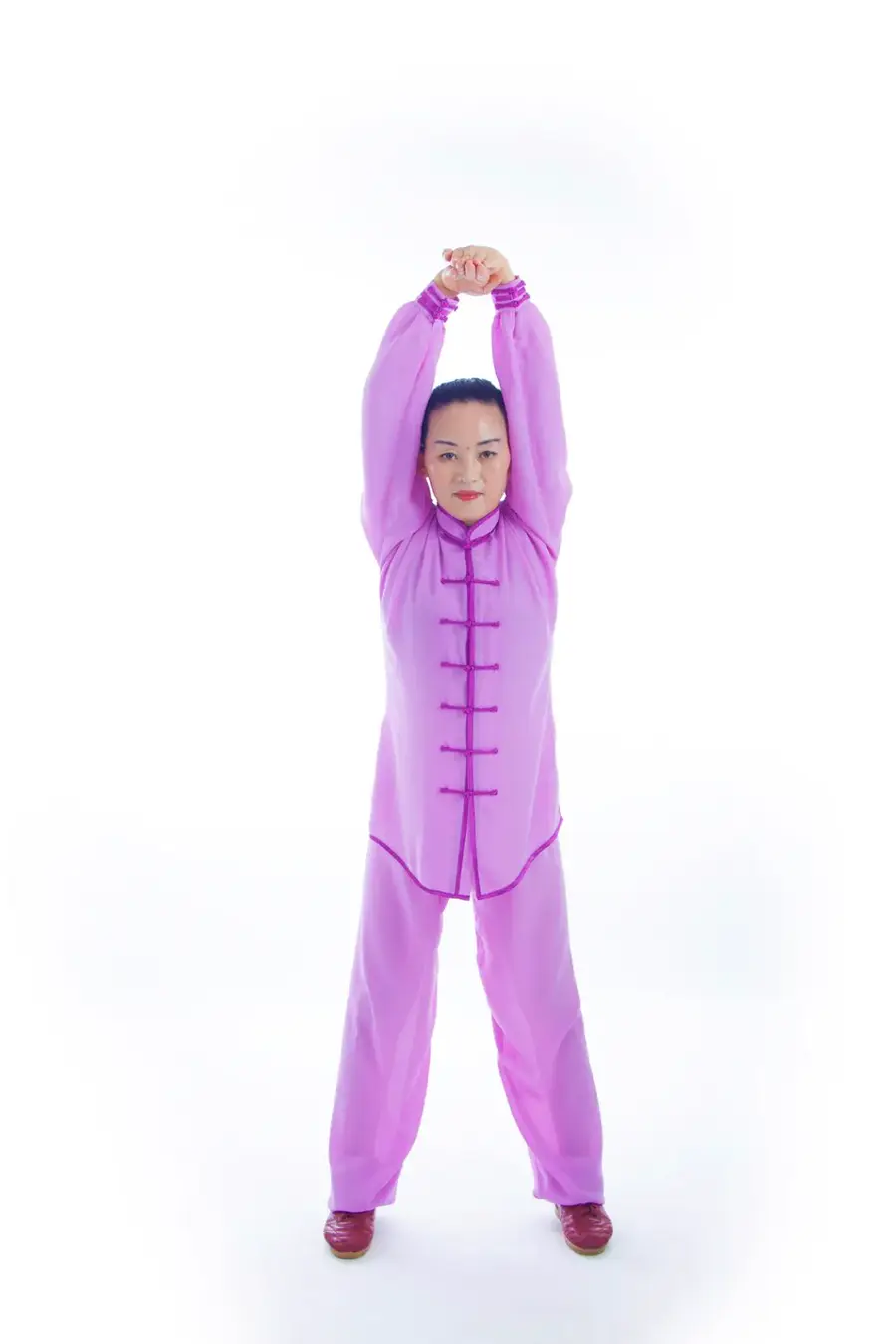
Mistake 1: the palms roll while rising and falling.
Correction: once the palms are stacked they stay flat and level with the floor through the whole rise and press, with only the wrists bending.
Mistake 2: the backs of the hands arch upwards as the arms rise.
Correction: keep both hands flat. Bend at the wrist and keep the hands level rather than letting the fingers and knuckles arch.
Mistake 3: the torso leans forward when the arms open backwards on the one-legged position.
Correction: stand upright, chest lifted, crown reaching up, and look straight ahead as the arms open back.
Bird Flying (鸟飞)
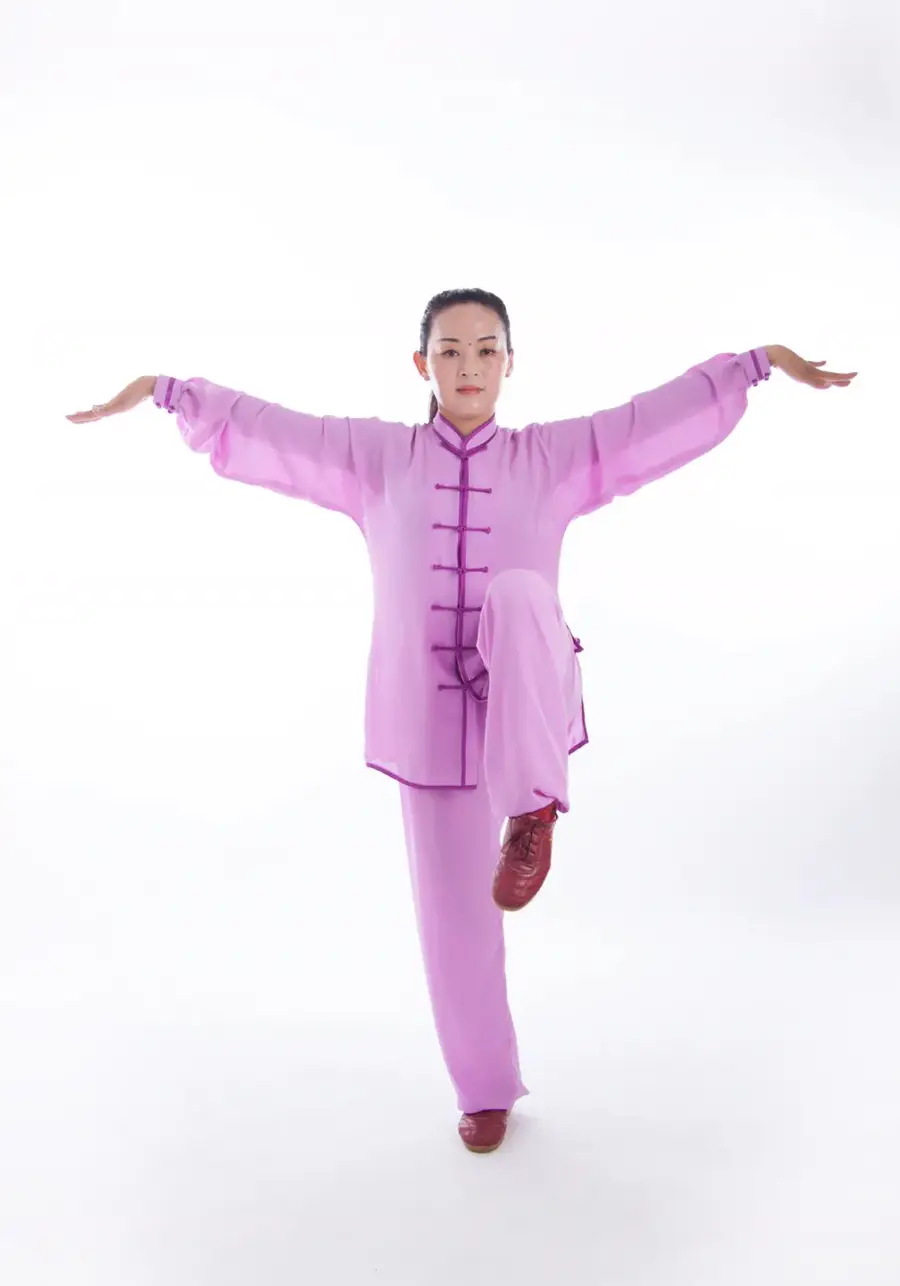
Mistake 1: the hands drop and then swing back up to the level of the navel, turning into a different shape mid-movement.
Correction: lower the hands to below the navel, palms facing each other obliquely with the fingertips about 10 cm apart and the arms in an arc — and stop there.
Mistake 2: the arms stay straight and the whole movement is stiff.
Correction: relax the shoulder, elbow and wrist, and let them follow one another in that order, up and down, like a bird wing.
The Numbers Worth Memorising
If you only remember a handful of figures from the whole set, make it these:
| Movement | The number |
|---|---|
| Preparation | Feet slightly wider than the shoulders |
| Pouncing the Tiger | Step no longer than your own foot; torso forward about 45 degrees |
| Deer Stamping | Front toes outward at least 90 degrees; heel lands one foot-length ahead |
| Deer Galloping | Step up shorter than your own foot; feet about 20 cm apart; back heel closes inward 30–40 degrees |
| Bear Rolling | Circle about 10 cm across; elbow angle under 90 degrees above the navel, over 90 degrees below |
| Bear Swaying | Land wider than the shoulders; no more than half a foot forward or back |
| Ape Raising | Hooks 5–10 cm apart; head surveys about 90 degrees |
| Ape Reaching | Turning arc through 135 degrees |
| Bird Flying | Fingertips about 10 cm apart, below the navel |
| Breathing | Never hold the breath |
How to Self-Check
Three practical habits. Film from behind for the deer gallop — the round back and the forward hips are visible from there and invisible from the front. Practise the bear rolling with a hand on your own navel so you can feel whether the circle is centred. And check the timing rather than the shape: if a form feels like work, the usual culprit is a stiff shoulder, a locked knee, or a step that is too large.
Where to Practise
The full set is taught as a four-week course in the Wu Qin Xi — Five Animal Frolics programme, which takes the twelve movements form by form with the corrections attached to each. The terminology — animal names, the twelve-movement structure, and why the fifth form is the bird form rather than the crane form — is covered in the Wu Qin Xi glossary entry.
The same paired-error format covers the eight-movement sister set in Ba Duan Jin Common Mistakes.
Corrections that refer to the meridians or to organ theory describe a historical framework, not medical advice. This article is for education. Talk to a qualified healthcare professional before starting any exercise programme, especially if you are managing a health condition or recovering from an injury.
Master Mingde Chen
12th generation Chen-style inheritor with decades of teaching experience.
View all articles →