Tai Chi Research in 2026: What the Latest Studies Actually Show
Key Takeaways
- A 2026 BJSM umbrella review synthesized 92 meta-analyses covering 1,744 randomized trials of traditional Chinese exercise for musculoskeletal disorders — the largest evidence synthesis in this field to date.
- The strongest 2026 support: chronic musculoskeletal pain (osteoarthritis SMD −0.37, low back pain SMD −1.43), balance and fall-risk outcomes, and selected bone-density outcomes in osteopenia and osteoporosis.
- Evidence is promising but more variable for blood-pressure support (−6.14 / −3.45 mmHg), cancer-related fatigue, sleep, and structured online programs.
- Dose matters: longer, more consistent programs (many beneficial trials ran 24+ weeks at roughly 120–200 minutes per week) outperform occasional practice.
- Tai Chi is not a cure, not a replacement for medical care, and not equally effective for every condition — this review says so in every section.
Author: Dr. Jing Li, PhD (Clinical Neuroscience)
Practice Review: Master Mingde Chen, 12th Generation Tai Chi Inheritor
- Last research review: September 2026
- Next planned review: January 2027
- Editorial standard: claims may be revised as full-text publications, trial updates, corrections, and new evidence become available.
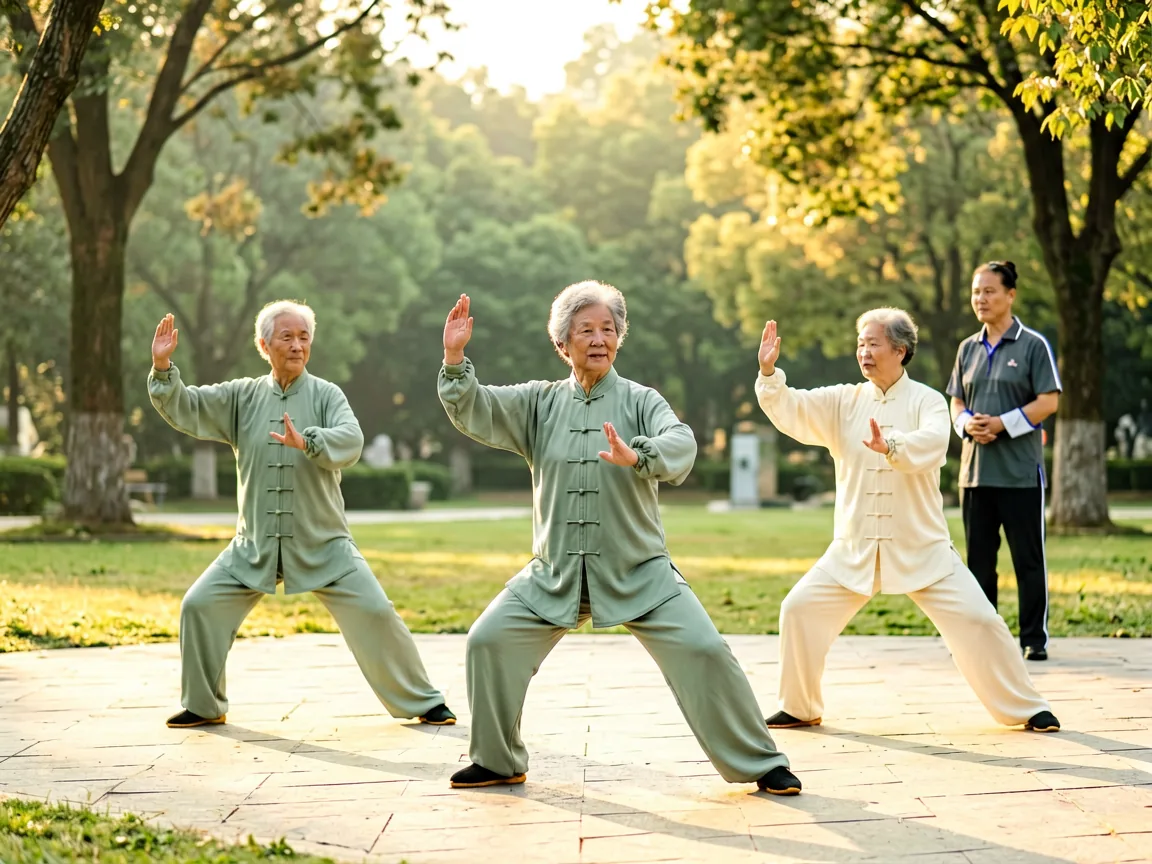
Tai Chi research in 2026 has become more specific, more clinically relevant, and more careful about evidence quality. The question is no longer simply, “Is Tai Chi good for health?” Researchers are increasingly asking narrower questions: Can Tai Chi help chronic knee pain? Does it support bone density in people with osteopenia? How much practice is associated with better outcomes? Can an online Tai Chi program work without in-person supervision?
The answers are encouraging, but not universal.
Large reviews published in 2026 strengthen the case for Tai Chi as a low-impact, complementary exercise for musculoskeletal health, balance, fall prevention, and selected bone-health outcomes. New evidence also points to potential value in blood-pressure support, cancer-related fatigue, sleep, and structured online programs for knee pain. At the same time, the research does not show that Tai Chi is a cure-all, a replacement for medical care, or equally effective for every condition.
This article reviews the most useful Tai Chi research published or indexed in 2026. It gives greater weight to umbrella reviews, systematic reviews, meta-analyses, and randomized controlled trials than to conference presentations, social-media summaries, or unverified claims.
Short version: The strongest 2026 evidence supports Tai Chi as a practical part of a long-term movement plan for pain, balance, mobility, fall prevention, and bone health. Evidence for blood pressure, cancer-related fatigue, sleep, cognition, and digital delivery is promising, but more variable.
Tai Chi Research in 2026 at a Glance
| Question | Best-supported 2026 answer |
|---|---|
| What has the strongest support? | Balance, fall-risk reduction, chronic musculoskeletal health, and selected bone-health outcomes in relevant populations (1). |
| Can Tai Chi help pain? | Evidence is most encouraging for osteoarthritis-related pain and low back pain, but effects differ by condition and program (2). |
| Does Tai Chi improve bone health? | Longer, regular programs may support bone-density outcomes in people with osteopenia or osteoporosis; it is complementary to clinical osteoporosis care (3). |
| Can it lower blood pressure? | Meta-analytic evidence suggests modest average blood-pressure reductions, but Tai Chi is not a replacement for medication or medical monitoring (5). |
| Can online Tai Chi work? | A structured online knee-pain program showed benefit, while remote delivery studies also show that feasibility does not guarantee every outcome improves (7, 8). |
| What dose is supported? | No universal dose exists; research often involves 2–3 or more sessions weekly, sustained for at least 12 weeks, with longer programs important for some bone-related outcomes (1, 3). |
How to Read Tai Chi Research
Tai Chi is not one standardized intervention.
A study may use Yang-style Tai Chi, Chen-style Tai Chi, simplified 24-form Tai Chi, Tai Chi for Arthritis, a seated adaptation, or a program that combines Tai Chi with resistance bands, mindfulness instruction, health education, or rehabilitation exercises. Class frequency may range from once a week to daily practice. Programs may last eight weeks, 12 weeks, six months, or longer.
That matters because a positive result for one program does not prove that every Tai Chi class, YouTube video, or self-guided routine will produce the same result.
The research terms below are useful when assessing a health claim:
| Study type | What it can show | Main limitation |
|---|---|---|
| Umbrella review | What multiple systematic reviews and meta-analyses collectively suggest | It depends on the quality and overlap of earlier reviews |
| Systematic review and meta-analysis | The average result across several studies | Studies may use very different Tai Chi forms, durations, and comparison groups |
| Randomized controlled trial | Whether one defined Tai Chi program outperformed a comparison group | Results may not apply to everyone or every teaching format |
| Feasibility study | Whether a program is practical, acceptable, and possible to deliver | It is usually too small to establish clinical effectiveness |
| Conference presentation | Emerging findings and research directions | It may not yet have completed peer review |
A good Tai Chi health claim should therefore include four elements:
- The population studied
- The health outcome measured
- The Tai Chi program used
- The certainty and limits of the evidence
For example, “Tai Chi may help balance in older adults” is more accurate than “Tai Chi prevents falls for everyone.” The first statement identifies a population and uses cautious language. The second overstates the evidence.
The Biggest 2026 Review
The most important broad publication of 2026 is an umbrella review in the British Journal of Sports Medicine examining traditional Chinese exercises for musculoskeletal disorders (1).
The review brought together 92 systematic reviews and meta-analyses, covering 1,744 randomized controlled trials. It included traditional Chinese exercise approaches such as Tai Chi, Qigong, Baduanjin, Yijinjing, and related mind-body movement practices. Its size makes it one of the largest evidence syntheses yet published in this field.
One boundary matters: this review covers traditional Chinese exercises as a category, not Tai Chi alone. It supports the statement that Tai Chi sits within a movement family that now has a large shared clinical evidence base — it does not attribute every pooled result to Tai Chi by itself.
The review did not conclude that Tai Chi works equally well for every musculoskeletal diagnosis. Instead, it found stronger evidence for selected outcomes, including chronic musculoskeletal pain, stiffness, physical function, and bone-related measures in some populations (1).
The key takeaway is not that Tai Chi is a miracle therapy. It is that structured traditional movement practice now has a much larger clinical evidence base than many people assume.
For Tai Chi practitioners, teachers, clinicians, and beginners, this matters because Tai Chi is often described in vague language: “good for the body,” “good for joints,” or “good for aging.” The 2026 evidence moves the discussion toward more useful questions:
- Which people are most likely to benefit?
- Which health outcomes have the best support?
- How often should a person practice?
- How long does a program need to last?
- When should Tai Chi be combined with medical care, physical therapy, medication, or strength training?
Chronic Pain and Musculoskeletal Health
Chronic musculoskeletal pain is one of the most practical areas for Tai Chi research.
A 2026 systematic review and meta-analysis on Tai Chi for chronic musculoskeletal pain found that Tai Chi was associated with improvements in pain outcomes, particularly among people with osteoarthritis and low back pain. For osteoarthritis-related pain, the pooled standardized mean difference was −0.37. For low back pain, the pooled standardized mean difference was −1.43, although results varied across studies and conditions (2).
A standardized mean difference is a way researchers compare effects across studies that use different pain scales. In general, a larger negative value in this context indicates greater pain reduction in the Tai Chi group relative to the comparison group.
But pain research requires caution.
“Chronic musculoskeletal pain” includes many different conditions: knee osteoarthritis, hip pain, chronic low back pain, fibromyalgia, neck pain, shoulder pain, and pain related to limited mobility or aging. These conditions do not have the same causes, the same risks, or the same treatment needs.
Tai Chi may be especially useful when pain is linked with one or more of the following:
- Reduced confidence in movement
- Poor balance or fear of falling
- Deconditioning after inactivity
- Joint stiffness
- Stress-related pain amplification
- Low physical activity tolerance
- Difficulty adhering to high-impact exercise
Tai Chi is slow enough to be adapted, but it is still exercise. A person with a new injury, severe joint swelling, unexplained pain, progressive weakness, numbness, fever, or sudden inability to bear weight should seek medical assessment rather than trying to “move through” symptoms. For a condition-by-condition look at when Tai Chi helps and when it should wait, see our Tai Chi for chronic conditions guide.
What this means for knee osteoarthritis
Knee osteoarthritis remains one of the most relevant use cases for Tai Chi.
Tai Chi combines controlled weight shifting, gentle knee flexion, hip movement, trunk rotation, postural alignment, and attention to balance. A well-taught class can help people practice movement without the jumping, running, or rapid directional changes that may be difficult during a painful flare. Our science-backed perspective on Tai Chi for arthritis covers the joint-specific evidence in more detail.
This does not mean Tai Chi repairs cartilage or replaces orthopedic care. It may, however, help some people improve pain tolerance, movement confidence, lower-body control, and day-to-day function.
For people with knee osteoarthritis, Tai Chi works best as part of a larger plan that may also include medical assessment, symptom monitoring, sleep support, weight management where appropriate, strength training, walking or cycling tolerance, and physical therapy.
Bone Density, Osteopenia, and Osteoporosis
Bone health is another area where Tai Chi research became more concrete in 2026.
A systematic review and meta-analysis of 19 randomized controlled trials examined Tai Chi in middle-aged and older adults with osteoporosis or osteopenia. The review found that Tai Chi was associated with improved bone mineral density outcomes. It also suggested that longer programs may be more meaningful than very short interventions (3).
The researchers identified a practical range that appeared frequently in beneficial programs:
- More than 24 weeks of practice
- Roughly 120 to 200 minutes of Tai Chi per week
- Consistent, repeated training rather than occasional classes
This should not be treated as a universal prescription. Bone density is influenced by age, sex, menopause status, hormone levels, medication use, nutrition, calcium and vitamin D status, smoking, alcohol intake, body weight, resistance training, prior fractures, and many other factors.
Still, Tai Chi may have a useful role because it addresses more than bone mineral density alone.
A person with osteoporosis is also concerned with:
- Fall risk
- Leg strength
- Posture
- Gait confidence
- Reaction to uneven ground
- Fear of movement after a fracture
- Ability to get up, turn, and change direction safely
Tai Chi does not replace osteoporosis medication when medication is indicated. It may be a valuable complementary movement practice, especially when the class is adapted for fracture risk and taught by someone who understands balance limitations, spinal safety, and progressive loading.
People with known vertebral fractures, severe osteoporosis, repeated falls, or major balance impairment should ask a clinician or qualified rehabilitation professional about appropriate modifications before starting.
Balance and Fall Prevention
Tai Chi remains one of the best-supported mind-body exercise approaches for balance in older adults.
A 2026 systematic review and meta-analysis of randomized trials in healthy older adults found that Tai Chi improved balance, walking speed, confidence related to falling, and fall-risk outcomes (4). Our longer overview of the evidence for Tai Chi and balance — and of why the CDC recommends Tai Chi for arthritis and fall prevention — puts these findings in context.
This is important because falls are not caused by one problem.
A fall can involve reduced leg strength, slower reaction time, poor vision, medication effects, dizziness, uneven surfaces, footwear, low confidence, cognitive overload, rushing, or a combination of several factors. Tai Chi cannot eliminate all of these risks, but it may train several relevant capacities at once:
- Controlled shifting of body weight
- Awareness of foot pressure and stance
- Single-leg support within a safe range
- Slow turning and directional changes
- Upright posture
- Coordination between arms, trunk, hips, knees, and feet
- Attention under movement
- Confidence in controlled stepping
The slow speed of Tai Chi is not a weakness. It allows a practitioner to notice how they transfer weight, where they tense unnecessarily, and when balance begins to change.
In a basic weight-shifting drill, the useful question is not whether the body can make the next step. It is whether the practitioner can feel the moment one foot becomes light, the standing leg accepts more load, and the torso stays quiet rather than rushing ahead. That slow transition is one reason Tai Chi can be relevant to balance training.
A useful analogy is learning to drive in an empty parking lot before driving on a busy road. Tai Chi gives the body time to rehearse balance decisions before they need to happen quickly in daily life.
Tai Chi and fall prevention are not identical
It is still important not to oversimplify.
A person with frequent falls should not rely only on a Tai Chi class. A proper fall-risk assessment may need to include medication review, vision testing, footwear, home hazards, blood-pressure changes, neurological symptoms, strength, mobility, and medical history.
Tai Chi can be part of fall prevention. It is not a substitute for evaluating why falls are happening.
Blood Pressure and Cardiovascular Health
A 2026 evidence map and systematic review of Tai Chi mechanisms in cardiovascular disease reported that Tai Chi was associated with reductions in blood pressure (5).
Across the reviewed evidence, Tai Chi was associated with an average reduction in systolic blood pressure of −6.14 mmHg and an average reduction in diastolic blood pressure of −3.45 mmHg. The review also reported signals of benefit for high-density lipoprotein cholesterol and six-minute walk performance (5).
These results are meaningful, but they should be interpreted carefully.
Blood pressure is affected by medication, salt intake, sleep, alcohol, stress, body weight, kidney function, exercise, smoking, pain, anxiety, and measurement conditions. A single exercise practice is not a replacement for clinician-guided hypertension treatment.
The safest interpretation is:
Tai Chi may modestly support blood-pressure management as part of a broader cardiovascular health plan.
That plan may include prescribed medication, regular blood-pressure monitoring, walking or other aerobic exercise, strength training, dietary guidance, smoking cessation, sleep treatment, stress support, and follow-up with a clinician.
The possible mechanisms are still being studied. Tai Chi may influence autonomic nervous system activity, stress regulation, breathing patterns, physical activity levels, muscular conditioning, and adherence to regular exercise. But it would be premature to claim that Tai Chi has one proven cardiovascular mechanism or that it is superior to all other forms of activity.
For many people, the practical advantage is sustainability. A low-impact activity that someone enjoys and practices consistently may be more useful over years than an ideal exercise program they never continue.
Cancer-Related Fatigue and Sleep
Cancer-related fatigue is not ordinary tiredness. It can persist despite rest and may affect physical activity, mood, sleep, work, relationships, and recovery.
A 2026 meta-analysis of nine randomized controlled trials involving 659 cancer patients examined Tai Chi for cancer-related fatigue. The review found encouraging results for fatigue and sleep quality. The pooled estimate for fatigue was a standardized mean difference of −1.29, while sleep quality improved with a standardized mean difference of −0.45. The certainty of evidence was stronger for fatigue and sleep than for quality-of-life findings (6).
This is an important development because cancer care increasingly recognizes the value of supportive interventions alongside surgery, chemotherapy, radiation, immunotherapy, hormone therapy, and medical follow-up.
Tai Chi may be appealing during or after cancer treatment because it can be adapted for low energy, reduced mobility, balance concerns, and variable physical capacity. Its slow pace may also feel more approachable than conventional exercise for someone rebuilding confidence after treatment.
However, the wording matters:
- Tai Chi may support fatigue management.
- Tai Chi may support sleep and quality of life.
- Tai Chi is not cancer treatment.
- Tai Chi should not delay medical evaluation of new or worsening symptoms.
People receiving active cancer treatment should discuss exercise plans with their oncology team, especially if they have severe anemia, infection risk, bone metastases, neuropathy, cardiopulmonary symptoms, surgery-related limitations, or treatment-related dizziness.
Can Online Tai Chi Work?
Digital Tai Chi research is becoming more relevant as more people learn through video, live online classes, mobile apps, and structured home programs.
A 2026 randomized clinical trial — the RETREAT trial — found that an online, unsupervised, multimodal Tai Chi intervention improved knee pain and function compared with the control condition (7). We covered that trial in detail in Online Tai Chi for Knee Osteoarthritis: What the RETREAT Trial Shows.
That is a useful finding. It suggests that Tai Chi does not always require long-term, face-to-face instruction to create meaningful outcomes.
But it does not mean every online Tai Chi video is a clinical program.
A structured online intervention may include:
- Progressive lesson sequencing
- Specific session frequency
- Clear safety instructions
- Adaptations for pain or limited mobility
- Reminders and adherence support
- Defined outcome goals
- Education about pacing and symptom monitoring
- A consistent movement curriculum
A separate 2026 study of remotely delivered Tai Chi for community-dwelling older adults found that remote delivery was feasible and acceptable. However, the study did not find clear treatment effects for several objective measures, including daily steps, sleep duration, sedentary time, or activity time (8).
This distinction is valuable:
A program can be convenient, enjoyable, and easy to access without automatically improving every measurable health outcome.
For online Tai Chi learners, the best approach is not simply to accumulate videos. A beginner does not need twenty different videos. They need one clear sequence, enough repetition to notice weight transfer and posture, and a way to reduce or pause movements when symptoms rise. Follow a coherent program, repeat foundational movements, practice at a sustainable frequency, and seek feedback when possible.
For instructors and course creators, this also suggests that online Tai Chi should be designed as a learning pathway rather than a content library. Clear progressions, modifications, practice schedules, and safety guidance matter.
Tai Chi Combined With Strength Training
Some of the more interesting 2026 research examines Tai Chi as part of a combined training program.
A 12-week randomized controlled trial studied Tai Chi combined with elastic-band training in older adults with sarcopenia. Sarcopenia is the age-related loss of muscle mass, strength, and physical function. The combined program improved physical mobility and executive inhibition and was associated with changes in prefrontal cortex activation measured with functional near-infrared spectroscopy (9).
This study is promising, but it should not be interpreted as proof that Tai Chi alone caused every improvement.
The intervention combined two different forms of training:
- Tai Chi, which emphasizes movement control, attention, balance, coordination, and body awareness
- Elastic-band exercise, which adds resistance and may directly support muscle strength and function
For many older adults, this combination makes practical sense. Tai Chi can improve movement quality and confidence, while resistance training can address strength and muscle capacity.
A balanced weekly plan may include both.
For example:
- Two or three Tai Chi sessions for balance, mobility, coordination, and stress regulation
- Two strength-training sessions for legs, hips, trunk, pushing, pulling, and grip
- Walking, cycling, swimming, or another aerobic activity based on ability and preference
- Recovery, sleep, and medical management when needed
Tai Chi does not have to compete with strength training. In many cases, they may work well together.
Brain Science and Mental Well-Being
Tai Chi is increasingly studied through the lens of brain activity, cognition, attention, mood, and stress regulation.
A 2026 systematic scoping review mapped research on Tai Chi, brain activity, and psychological outcomes. This does not establish a single proven “Tai Chi brain mechanism.” It shows that researchers are taking the subject seriously enough to examine neural activity, cognitive outcomes, emotional health, and mind-body mechanisms together (11). Our own review of Tai Chi research on brain health, Alzheimer’s, and dementia covers the cognition-specific studies.
That is a meaningful shift.
Tai Chi includes several components that are often studied separately:
- Low- to moderate-intensity physical activity
- Breathing regulation
- Attention to body position
- Coordinated movement
- Postural control
- Slow motor learning
- Repetition
- Social participation in group settings
- Stress reduction through focused practice
It is plausible that these features interact. But “plausible” is not the same as “proven.”
The responsible way to describe the current evidence is:
Tai Chi may support psychological well-being and cognitive health through multiple interacting pathways, but research has not established a single definitive neural mechanism or a clinical replacement for mental-health treatment.
People experiencing depression, anxiety, trauma symptoms, panic, severe insomnia, cognitive decline, or suicidal thoughts should seek professional support. Tai Chi can be a helpful routine or complementary practice, but it is not a substitute for appropriate mental-health care.
How Much Tai Chi Should You Practice?
One of the most common questions is simple: How often should I practice Tai Chi?
The research does not provide one exact schedule that works for every health goal, age group, or Tai Chi style. Still, the 2026 evidence offers a useful practical pattern. A 2026 randomized trial comparing Tai Chi styles and training doses against community-based exercise in middle-aged and older adults adds further support for thinking in terms of dose rather than style loyalty (10).
Longer and more consistent programs tend to show more benefit than occasional practice.
For bone-related outcomes, research suggests that programs lasting more than 24 weeks and totaling roughly 120 to 200 minutes per week may be more likely to produce meaningful changes (3). The large 2026 musculoskeletal umbrella review also reported better results in some contexts when programs involved at least three weekly sessions, at least 150 minutes per week, and more than six months of practice (1).
These figures should be treated as a framework, not a rigid rule. In practice, a regular fifteen-minute session two or three times a week tends to survive real life better than an ambitious ninety-minute class abandoned by February.
A beginner with knee pain may start with 10 to 20 minutes, two or three times per week. Someone already comfortable with Tai Chi may practice 30 to 60 minutes most days. A person focused on learning a form may benefit from shorter, more frequent sessions. Someone recovering from illness may need supervised, seated, or highly modified practice. If you are starting from zero, our Tai Chi for beginners guide turns these dose ranges into a first-month plan.
A sustainable approach often looks like this:
| Goal | Practical starting point | Longer-term direction |
|---|---|---|
| General mobility and stress relief | 15–20 minutes, 2–3 times weekly | 20–40 minutes, 3–5 times weekly |
| Balance and fall prevention | 20–30 minutes, 2–3 times weekly | 30–60 minutes, 3 or more times weekly |
| Chronic pain support | Short, gentle sessions with symptom monitoring | Consistent practice over at least 12 weeks, alongside clinical care when needed |
| Bone health support | Regular weight-bearing Tai Chi within individual safety limits | A sustained program over 24 weeks or longer, ideally combined with strength work |
| Online learning | Follow one structured beginner sequence | Repeat and progress rather than constantly switching routines |
The best schedule is the one a person can follow safely for months, not the most ambitious schedule they abandon after two weeks.
What the Research Does Not Yet Prove
The growing evidence base is encouraging, but there are important gaps.
Tai Chi research is limited by differences in form, teaching style, class length, instructor expertise, home practice, outcome measurement, control groups, and participant health status. A 12-week Yang-style group class for older adults with knee osteoarthritis is not the same intervention as a self-guided 24-form video program for healthy adults.
The following claims should be avoided:
- Tai Chi cures arthritis.
- Tai Chi rebuilds cartilage.
- Tai Chi reverses osteoporosis.
- Tai Chi replaces blood-pressure medication.
- Tai Chi treats cancer.
- Tai Chi is proven to prevent all falls.
- Tai Chi is a substitute for psychotherapy or psychiatric care.
- Any Tai Chi video online will produce clinical results.
- One specific Tai Chi style is scientifically proven to be best for everyone.
There is also a difference between a promising finding and a settled conclusion.
For example, research on Tai Chi, cognition, brain activity, interoception, inflammatory markers, and digital delivery is expanding quickly. These are important areas to watch. But the most responsible language remains “may,” “is associated with,” “shows promise,” and “requires further study” when evidence is early, mixed, or based on small trials.
A Practical Bottom Line
The latest Tai Chi research does not support exaggerated claims. It supports something more useful.
Tai Chi is a low-impact movement practice with a growing clinical evidence base. In 2026, the strongest support remains in areas such as musculoskeletal health, balance, mobility, fall prevention, and selected bone-health outcomes. Evidence is also building for chronic pain, blood-pressure support, cancer-related fatigue, sleep, and structured online programs.
For many people, Tai Chi’s value comes from its combination of physical movement, balance practice, body awareness, breathing, attention, and repeatable routine. It can be adapted for beginners, older adults, people returning to activity, and those who want an alternative or complement to high-impact exercise. The broader pattern across dozens of studies is summarized in our research hub: 8 scientific findings on Tai Chi health benefits.
The best way to use Tai Chi is not as a miracle cure. Use it as a sustainable practice within a broader health plan.
That may include walking, strength training, medical care, physical therapy, sleep support, social connection, prescribed medication, nutrition, stress management, and professional guidance when symptoms require it. For readers managing back pain specifically, the Tai Chi back pain relief guide translates this evidence into a week-by-week routine with an honest safety gate.
Tai Chi can be modest. It can also be powerful precisely because modest practice, repeated over time, can change how a person moves, balances, breathes, and feels in daily life.
Medical and Safety Note
This article is for educational purposes and is not medical advice.
Consult a qualified healthcare professional before beginning or changing an exercise program if you have unstable heart symptoms, uncontrolled blood pressure, severe osteoporosis, recent fracture, major balance impairment, severe pain, neurological symptoms, cancer treatment-related limitations, or concerns about medication effects.
Stop and seek medical advice for chest pain, fainting, severe shortness of breath, sudden weakness, new numbness, severe dizziness, or rapidly worsening pain.
How We Selected Sources
Methodology: This review prioritizes peer-reviewed research published or indexed in 2026, including umbrella reviews, systematic reviews, meta-analyses, randomized controlled trials, and feasibility studies. We give greater weight to evidence syntheses and controlled clinical studies than to conference presentations, media reports, or unverified online claims. Research findings are described cautiously because Tai Chi programs, participant populations, and outcome measures vary substantially across studies.
Research Sources
- Chen WX, Li YZ, Kang LD, Jiang XF, Chen YH, Yang D, et al. Efficacy and evidence certainty of traditional Chinese exercises for musculoskeletal disorders: an umbrella review of meta-analyses. British Journal of Sports Medicine. 2026 Aug 17 (online first). doi:10.1136/bjsports-2026-111792. PubMed PMID: 42608034 (
https://pubmed.ncbi.nlm.nih.gov/42608034/). - Chen S, Liu W, Fu Q, Huang M, Lin W, Ding Y, et al. Efficacy and safety of Tai Chi for chronic musculoskeletal pain: a systematic review and meta-analysis. Frontiers in Pain Research. 2026;7:1678660. doi:10.3389/fpain.2026.1678660. PubMed PMID: 41815824 (
https://pubmed.ncbi.nlm.nih.gov/41815824/). - Guo X, Wang J, Wang Y, Sun Q. The impact of Tai Chi on osteoporosis and osteopenia in middle-aged and elderly adults: a systematic review and meta-analysis of randomized controlled trial. Osteoporosis International. 2026 Feb 24 (online first). doi:10.1007/s00198-026-07910-0. PubMed PMID: 41733627 (
https://pubmed.ncbi.nlm.nih.gov/41733627/). - Dong R, Hamzah MSGB, Awang MMB, Qiu J, Chen S. Effects of Tai Chi on balance and fall prevention in healthy older adults: a randomized controlled meta-analysis. Frontiers in Public Health. 2025;13:1638006. doi:10.3389/fpubh.2025.1638006. PubMed PMID: 41567791 (
https://pubmed.ncbi.nlm.nih.gov/41567791/). - Liu J, Yu H, Jan YK. A systematic review and meta-analysis of the mechanism of action of Tai Chi on cardiovascular disease: evidence map of aerobic and mind-body exercise pathways. Scientific Reports. 2026 Jan 30;16(1):6708. doi:10.1038/s41598-026-35996-3. PubMed PMID: 41617914 (
https://pubmed.ncbi.nlm.nih.gov/41617914/). Journal article:nature.com(https://www.nature.com/articles/s41598-026-35996-3). - Qiao C, Zhao XH, Jiao YC, Li HW, Guo N, Wei LY, et al. Tai Chi for treating cancer-related fatigue: a meta-analysis of randomized controlled trials. World Journal of Methodology. 2026 Mar 20;16(1):109145. doi:10.5662/wjm.v16.i1.109145. PubMed PMID: 41809168 (
https://pubmed.ncbi.nlm.nih.gov/41809168/). - Zhu SJ, Hinman RS, Nelligan RK, Li P, De Silva AP, Harrison J, et al. Online unsupervised Tai Chi intervention for knee pain and function in people with knee osteoarthritis: the RETREAT randomized clinical trial. JAMA Internal Medicine. 2026 Jan 1;186(1):15-25. doi:10.1001/jamainternmed.2025.5723. PubMed PMID: 41143827 (
https://pubmed.ncbi.nlm.nih.gov/41143827/). - Chen Y, Ryu S, Zeng N, Oginni J, Taylor-Piliae RE, Gao Z. Feasibility of remotely delivered Tai Chi on older adults’ 24-hour movement behaviors: a crossover randomized controlled trial. Complementary Therapies in Clinical Practice. 2026 Aug;64:102072. doi:10.1016/j.ctcp.2026.102072. PubMed PMID: 42285000 (
https://pubmed.ncbi.nlm.nih.gov/42285000/). - Zhan S, Wu S, Ma Q, Hu C, Hu H, Wang M. Effects of Tai Chi combined with elastic band training on muscle and executive inhibitory function in older adults with sarcopenia: a randomized controlled trial based on fNIRS. Age and Ageing. 2026 Apr 4;55(4):afag095. doi:10.1093/ageing/afag095. PubMed PMID: 42001466 (
https://pubmed.ncbi.nlm.nih.gov/42001466/). - Qiu J, Wang J, Song X, Shu W, Kim SM. Dose-related effects of different Tai Chi styles versus traditional community-based exercises on cardiometabolic health and physical function in middle-aged and older adults: randomized controlled trial. JMIR Aging. 2026 Apr 23;9:e80125. doi:10.2196/80125. PubMed PMID: 42061844 (
https://pubmed.ncbi.nlm.nih.gov/42061844/). - Yue F, Chen N, He H, Zhang X, Pan C, Yang H. Tai Chi, brain activity and psychological outcomes: a systematic scoping review. Frontiers in Psychology. 2026;17:1865028. doi:10.3389/fpsyg.2026.1865028. PubMed PMID: 42325330 (
https://pubmed.ncbi.nlm.nih.gov/42325330/). - Usman JS, Wong TW, Ng SSM. Effects of non-invasive brain stimulation combined with Tai Chi on the physical, cognitive, emotional, sleep, and quality-of-life outcomes in older adults: a systematic review and meta-analysis. Experimental Gerontology. 2026 Jun 1;218:113125. doi:10.1016/j.exger.2026.113125. PubMed PMID: 41951190 (
https://pubmed.ncbi.nlm.nih.gov/41951190/). Emerging research only: combined rTMS plus Tai Chi may improve sleep in some older adults with depressive symptoms and/or mild cognitive impairment; evidence for other outcomes remains limited. - Osher Center for Integrative Health, Mass General Brigham and Harvard Medical School. 2026 Tai Chi & Qigong Conference: The Science of Tai Chi & Qigong as Whole Person Health. Conference listing:
oshercenter.org(https://oshercenter.org/oc-event/2026-tai-chi-qigong-conference/). Background context only — a conference listing evidences that the event took place, not the results of any individual study presented there. - The Guardian. Largest review of its kind confirms benefits of tai chi and other Chinese exercises. 2026 Aug 24.
theguardian.com(https://www.theguardian.com/society/2026/aug/24/largest-review-of-its-kind-confirms-benefits-of-tai-chi-and-other-chinese-exercises). Media coverage of source 1 — provided for scale context; the scientific claims are cited to the BJSM paper itself.