Can a teenager really master supreme Tai Chi in days? Did Jin Yong just write thrilling fantasy, or did he secretly encode real, profound martial principles into the legend of Zhang Wuji? Let’s dissect the epic tales.
Beyond the dazzling “Nine Yang Divine Power” and “Qiankun Da Nuo Yi,” we find a surprising roadmap to authentic Taijiquan—bridging pop culture wonder to tangible practice.
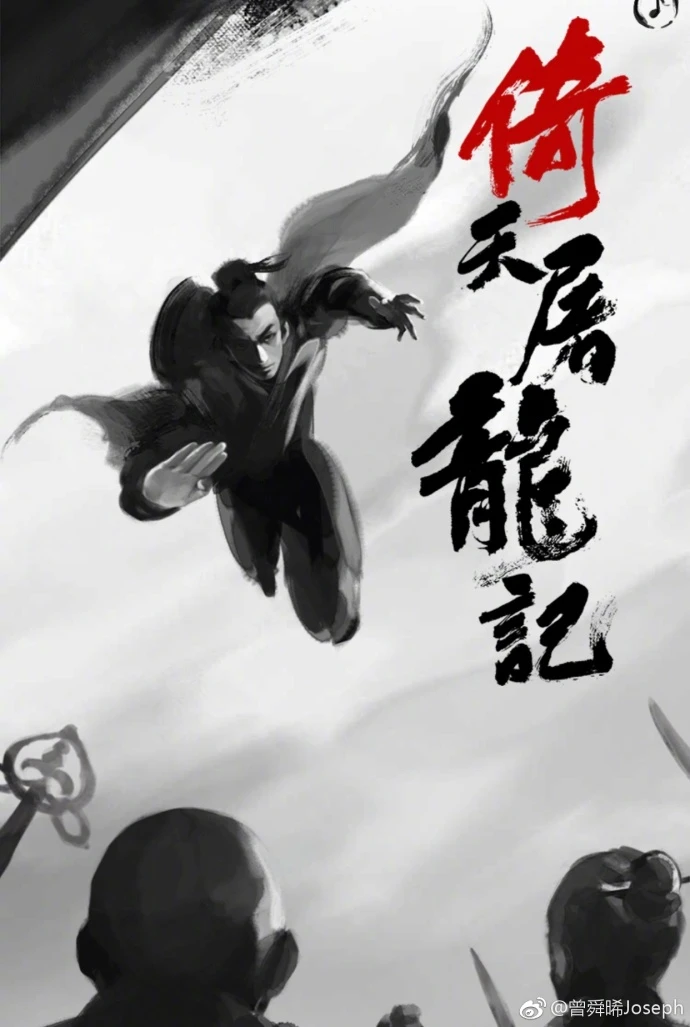
Decoding Zhang Wuji’s “Tai Chi” in Action
Jin Yong brilliantly wove classical Taijiquan concepts into unforgettable scenes:
- The Bright Summit Siege: Against the Six Sects, Zhang Wuji doesn’t overpower; he “sticks, adheres, connects, and follows” (Zhan Nian Lian Sui), the core quartet from the Song of Striking Hands. He “listens” to his opponents’ force (adherence) and moves with it (connection/following), making even the fierce Emei sword techniques “sink into cotton.” Real-world parallel: Watch a Chen-style master demonstrate “silk-reeling energy” slowly—the spiraling neutrality is the same principle.
- Rescuing A’Li at Shaolin: This is a textbook display of “leading into emptiness” (Yin Jin Luo Kong) and “four ounces deflecting a thousand pounds” (Si Liang Bo Qian Jin). Wuji borrows and redirects the monks’ own overwhelming momentum, a perfect echo of the classic axiom: “Yield in order to advance; advance within yielding.”
- The Wan’an Temple Fire Array: Here we see the “Tai Chi circle” in motion. His movements describe arcs and spirals that neutralize linear attacks, mirroring the circular footwork and body mechanics in Yang Luchan’s old frame.
- “Instant” Mastery of Tai Chi Sword: How is this even plausible? The novel hints at the three stages of mastery: 1) Form Familiarity, 2) Understanding Jin (energy), 3) Spiritual Clarity. Wuji, already possessing the immense qi of the Nine Yang Art and the kinetic intelligence of the Qiankun Da Nuo Yi, skips Stage 1. Under Zhang Sanfeng’s “intent-guided” teaching, he leaps directly to “Understanding Jin,” grasping the energy behind the form.
Jin Yong’s Three Brilliant “Tai Chi Easter Eggs”
The author planted gems for the discerning reader:
- Zhang Sanfeng’s 100-day “intent-guided qi” treatment on the comatose Wuji mirrors advanced Daoist “fetal breathing” (Tai Xi) practices—rebuilding life force from a state of profound stillness.
- Wuji’s line to Zhao Min, “Tai Chi Quan is not about the techniques, but about understanding the energy (dong jin),” is a direct, verbatim quote from the foundational Taijiquan Classic.
- Xie Xun’s observation that “He never attacks first” perfectly encapsulates the Tai Chi strategy of “When the opponent is hard, I am soft; I arrive later but strike first.”
Where Novel and Reality Diverge: 3 Insightful Gaps
Jin Yong’s dramatic liberties actually highlight critical truths for real-world practitioners:
- The “Dual Cultivation” Risk: Simultaneously running the explosive, Yang-dominant Nine Yang Art and the harmonizing, Yin-Yang balanced Tai Chi Quan at full power? In internal arts theory, this could lead to conflicting energy pathways, a state traditionally warned against as “qi deviation” (Zou Huo Ru Mo).
- The Myth of the Young Master: Achieving “round and lively” mastery of Tai Chi Sword at 20? Historical masters like Yang Chengfu dedicated over 40 years. True kung fu is the child of time—cultivating not just technique, but patience, body awareness (ting jin), and adaptive wisdom that no “divine power” can shortcut.
- The Holy Fire Token Contradiction: These exotic, erratic techniques prioritize external display, unpredictability, and cleverness. Tai Chi principles champion internal storage, naturalness, and following inherent law. They are philosophical opposites. Wuji’s later struggle to integrate them is, in fact, a profound lesson in martial consistency.
The Verdict from Real Masters
Many contemporary masters see the value. Chen-style grandmaster Chen Zhenglei might note that slowing down Wuji’s fight with the Xuanming Elders reveals textbook “chan si jin” (silk-reeling energy).
Xingyiquan masters would recognize the purity of his “borrowing force” principle.
From Fiction to Function: Your Real-World Pathway
Jin Yong’s “exaggerations” serve as brilliant signposts. They point to both the pinnacle and the pitfalls on the genuine Tai Chi path.
We’ve translated these fictional lessons into a real curriculum:
| If You Were Fascinated By… | The Real-World Principle Is… | Start Your Journey With… |
|---|---|---|
| Wuji’s “Limitless Internal Power” | Building authentic, rooted qi from the ground up. | “Wuji Stance Foundations” – Cultivate your own “dantian battery” through scientific, progressive standing practice. |
| The “Magic” of Borrowing Force | Developing Ting Jin (Listening Energy) and Hua Jin (Neutralizing Energy) in real-time interaction. | “Push Hands: From Yield to Control” – Learn true “four ounces deflecting a thousand pounds” with a partner. |
| The Elegance of Tai Chi’s Circular Flow | Mastering the internal mechanics that make a single movement infinitely adaptable. | “Deconstructing Lan Que Wei” – Discover how Peng, Lu, Ji, An are born from one root and applied in countless ways. |
Zhang Wuji’s Tai Chi was written to inspire. Yours can be built to transform.
Want to Go Deeper? Visit our [Social Media] for side-by-side comparisons of novel illustrations and historical Tai Chi photos.
Exclusive for Readers: Reply “Zhang Wuji” to our welcome message for a special article: The Tai Chi Mindset: From Wuji’s World to Modern Leadership.
FAQ
Did the real Zhang Wuji or his Tai Chi exist?
Zhang Wuji is a fictional hero created by author Jin Yong (Louis Cha). However, Jin Yong was deeply knowledgeable about Chinese martial arts culture. He wove authentic Taijiquan philosophy and classical theory into Wuji's story, making it a brilliant vehicle for explaining real concepts.
What is the most realistic Tai Chi principle shown by Zhang Wuji?
The principle of "Using four ounces to deflect a thousand pounds" (Si Liang Bo Qian Jin) and "Never attacking first" are core, real-world Tai Chi strategies. Zhang Wuji's battles at the Bright Summit and Shaolin perfectly dramatize these concepts of yielding, listening, and redirecting force.
What's the biggest myth about Zhang Wuji's Tai Chi?
The myth of instant mastery. While Zhang Wuji learns quickly due to his "Nine Yang" foundation, real Tai Chi mastery requires years of dedicated practice to develop not just form, but the internal sensitivity (Ting Jin) and adaptive skill that cannot be rushed.
Can I learn to fight like Zhang Wuji?
You can learn the real principles he demonstrates—yielding, circular neutralization, and internal power development. However, this comes through progressive training in fundamentals, push hands, and application, not through acquiring "secret manuals." Our courses are designed to build that real skill step-by-step.
How can Jin Yong's novels help me learn real Tai Chi?
Zhang Wuji's story is a captivating "gateway drug" to deep Tai Chi philosophy. It sparks interest in concepts like Jin (internal energy), Yin/Yang balance, and strategy. Use that inspiration to seek out authentic, structured practice that transforms fictional wonder into tangible body skill and understanding.