Tai Chi Chuan, a gem of traditional Chinese martial arts, transcends mere physical exercise. At its heart lies a profound philosophical and practical dance between two fundamental forces: Song (松, often translated as relaxation, looseness, or sinking) and Jin (紧, tension, firmness, or intent).
This is not a battle of opposites, but a dynamic, inseparable partnership.
The art’s famed flow, power, and health benefits emerge from their continuous, harmonious interplay. Misunderstand this relationship, and the practice devolves into "Double-Heaviness" (Shuang Zhong, 双重) and stiffness, losing its essence entirely.
This article will guide you through this core dialectic, using key principles like Song Chen (松沉, relaxed sinking) and Xu-Shi (虚实, emptiness-fullness) to illuminate the path to authentic, fluid Tai Chi.
The Foundation: Understanding “Song” (松) - Not Collapse, but Connected Ease
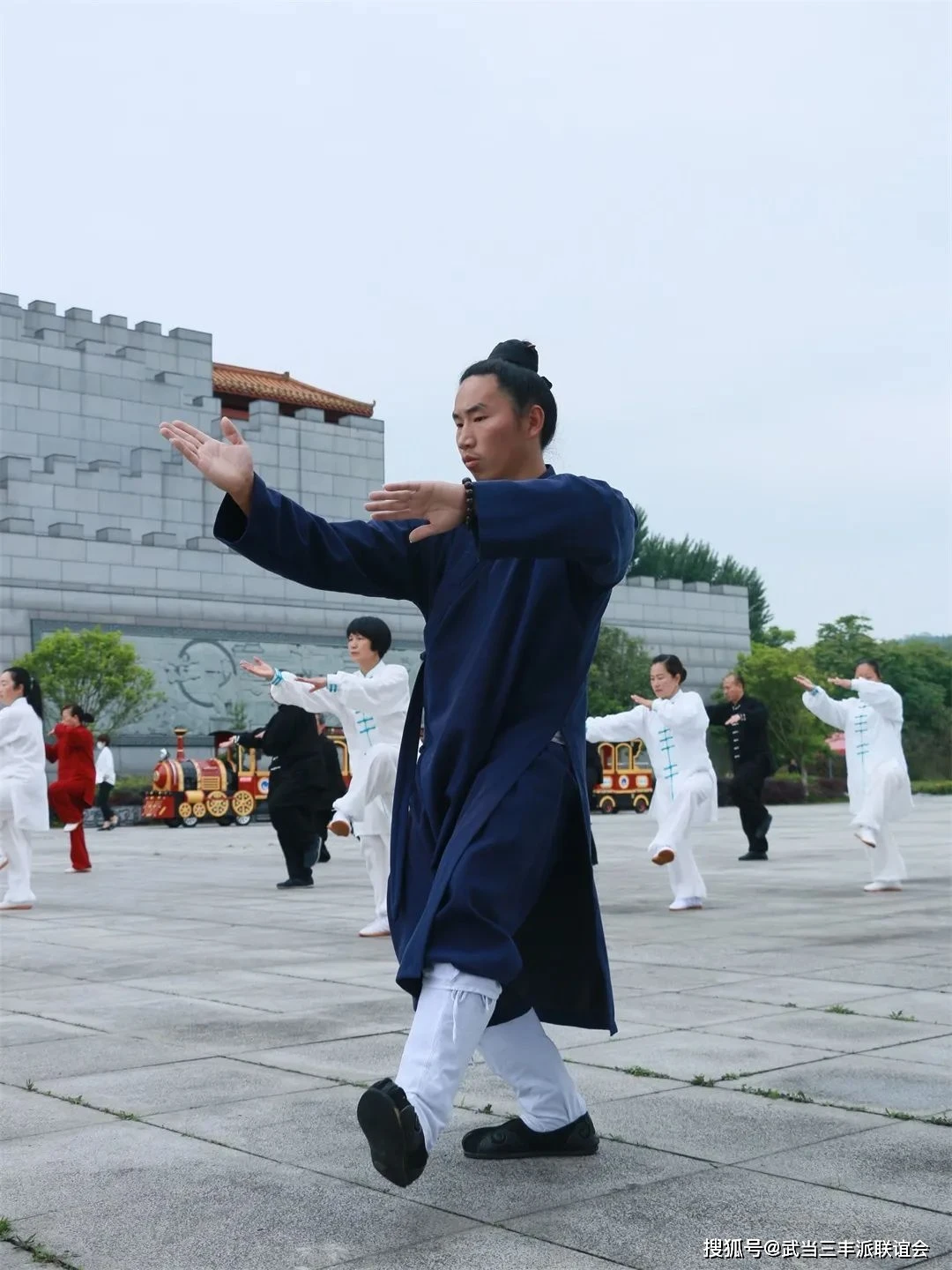
The first command a Tai Chi student often hears is “Relax!” Yet, this is perhaps the most misunderstood instruction. Song is not flaccid collapse, drowsiness, or a general lack of effort. It is a highly aware, connected, and structured state of ease.
Think of a well-oiled marionette, its strings taut but not straining, allowing effortless movement from the central control point.
Or consider a cat, supremely relaxed yet capable of explosive action in an instant. This is the quality of Song.
In practice, Song manifests as Song Chen (松沉, relaxed sinking). It is the process of releasing unnecessary muscular tension, particularly in the shoulders, chest, and upper back, allowing the body’s weight to settle downward naturally.
This is guided by mindful intent (Yi, 意), not brute force. The knees soften, the hips relax, and the weight connects firmly yet gently through the soles of the feet to the ground. You feel rooted, like a tree, with a heavy, stable lower body and a light, upright, and alert upper body.
Why is Song Chen crucial?
- It is the source of stability: It prevents being “top-heavy” and easily uprooted.
- It generates power: Ground force can only be borrowed and transmitted upward if the body is relaxed enough to serve as a conduit. Tension acts as a roadblock.
- It enables fluidity: Only a relaxed joint can turn freely. Song in the waist and hips is the key to all turning and weight transfer, allowing movement to be led from the center, not the limbs.
The Dynamic Partner: Understanding “Jin” (紧) - Not Stiffness, but Focused Intent
If Song is the canvas, Jin is the brushstroke. Jin is often misconstrued as hard, external muscular tension—the very thing Tai Chi seeks to avoid. True Jin is an alert, focused readiness or a gathered intent that arises from within deep relaxation.
It is the moment of focus in archery before the arrow is released. It is the brief gathering of the body’s structure just before issuing force (Fa Jing, 发劲). Jin is the “Yang” within the “Yin” of Song. It is never a prolonged state of clenching, but a precise, momentary activation.
In movement, Jin is the clear, definitive line in a calligraphic stroke that is supported by the empty space around it. It is the leg that is full (Shi, 实) and rooted, providing a stable platform for the other, empty (Xu, 虚) leg to move without burden.
The Bridge: Xu-Shi (虚实) - The Art of Dynamic Balance
This brings us to the operational principle that governs the Song-Jin dance: Xu-Shi, or Emptiness-Fullness. This is the continuous, flowing transition of weight, intent, and function.
- The "Full" (Shi) side: The leg bearing most of the weight is Shi. It is grounded, stable, and exhibits a type of Jin—a firm, connected structure. Yet, this firmness is built upon a Song hip and knee.
- The "Empty" (Xu) side: The leg bearing little to no weight is Xu. It is light, agile, ready to move or step, embodying Song. Yet, it is not limp; it retains a subtle Jin in its structural alignment and readiness.
Xu-Shi is in constant, wave-like transition. In “Cloud Hands,” as you shift weight from right to left, the right leg transforms from Shi to Xu, while the left transforms from Xu to Shi.
The shift is driven by the Song and turn of the waist, not by pushing with the legs. This is dynamic balance in motion, the very essence of avoiding stagnation.
The Pitfalls: Double-Heaviness (双重) and Stiffness
When the Song-Jin dialectic breaks down, and Xu-Shi is not clearly distinguished, two critical errors emerge:
1. Double-Heaviness (Shuang Zhong, 双重):
This is the cardinal sin in Tai Chi. It occurs when both sides of a pair are trying to perform the same function simultaneously, losing distinction. The most common example is in the legs: both legs are bearing 50% of the weight, or both are pushing to move the body.
The result is a stuck, rooted-to-the-spot feeling. The body becomes a static statue, unable to transfer force or move fluidly. Double-heaviness can also occur in the arms—for instance, both arms pushing outward with equal force, creating a clumsy, easily destabilized frame.
Root Cause: A failure to establish clear Xu-Shi. It often stems from a fear of losing balance or a misunderstanding of rooting, leading one to cling to the ground with both feet.
2. Stiffness:
Stiffness is the quality of movement that results from a loss of the Song-Jin dynamic. It is movement driven by localized muscle tension rather than integrated, relaxed power from the core.
A stiff practitioner might perform the “Single Whip” with locked elbows and tense shoulders, arms moving independently like rigid sticks. The beauty and efficiency of the movement are lost.
Root Cause: Often, it’s an overemphasis on Jin (misunderstood as hardness) or a complete lack of Song. It can also arise from excessive mental effort, where the mind’s focus creates physical tension.
Action Analysis: Seeing the Theory in Practice
Let’s examine classic forms to see how Song, Jin, and Xu-Shi work together to avoid these pitfalls.
- Commencement (Qi Shi): You stand with feet parallel, knees slightly bent. You practice Song Chen, releasing tension downward. There is a subtle Jin in the alignment of the spine and the gentle uplifting of the crown. Weight is evenly distributed, a neutral starting point before Xu-Shi begins.
- Grasp Sparrow’s Tail (Lan Que Wei) - Ward Off (Peng): As you shift forward into a bow stance, the front leg becomes Shi. Its Jin is the stable, rooted structure, but its knee remains Song, not locked. The rear leg is Xu, light and ready, knee Song. The forward movement is generated by the back leg pushing off (but not straightening rigidly!) while the waist turns, transferring force through a Song torso into the forward arm. The arm’s ward-off energy is a manifestation of Jin—a rounded, expansive intent—supported by the Song of the shoulder and elbow. Any stiffness in the shoulder destroys the power.
- Wave Hands Like Clouds (Yun Shou): This is a masterclass in Xu-Shi transition. The weight shifts side-to-side in a smooth, continuous flow. The “full” side is rooted; the “empty” side light. The hands float, guided by the turning of the Song waist. If the waist is stiff, the hands and arms will work independently, leading to double-heaviness in the upper body. The movement’s namesake cloud-like quality comes from supreme Song guided by clear intent (Jin).
The Path to Unification: Practical Guidance
How do we cultivate this delicate balance?
- Mind Leads the Body (Yi Yi Ling Qi): Your intent (Yi) is the conductor. Visualize the movement, the flow of weight, the feeling of sinking before you do it. Use your mind to release tension (Song) and to direct energy (Jin).
- Root in the Feet, Command from the Waist: All movement initiates from the subtle push/pull of the feet against the ground and is directed by the rotation of the waist. Keep your waist and hips supremely Song to allow this. If your limbs move first, you’ve already lost the connection.
- Practice Standing Post (Zhan Zhuang): This is the laboratory for Song Chen and sensing Xu-Shi. Stand in a neutral or slight bow stance. Focus entirely on releasing tension downward, joint by joint. Feel the connection to the ground. Then, practice subtly shifting your weight from 100% on one leg (Shi) to 100% on the other (Xu), keeping the upper body perfectly relaxed and upright.
- Move Slowly with Deep Awareness: Slow practice is non-negotiable. It allows you to monitor for tension, to feel the exact moment of weight transfer, and to ensure every movement is led from your center.
- Breathe Naturally: Let your breath be deep, slow, and unforced. It harmonizes with movement and promotes Song. Do not forcefully coordinate breath with moves initially; let it come naturally.
PRACTICE REFERENCE TABLE: The Dialectical Expression of Tai Chi's "Song" and "Jin"
This table is designed to help you intuitively sense and calibrate the relationship between relaxation and tension in your practice through specific movement examples.
| Dimension | Manifestation of "Song" (松) | Manifestation of "Jin" (紧) | The Dialectical Unity: How They Cooperate in Movement |
|---|---|---|---|
| State & Sensation | Like water flowing downward, like a sandbag sinking; joints are open and connected; muscles are elastic, not completely passive. | Like a drawn bow, like a stretched rubber band; the structure is stable and supportive; the mind is highly focused with clear intent. | Song is the constant state, Jin is the transient state. At the moment of issuing power in "Wild Horse Parts Its Mane," the body, based on overall Song Chen, exhibits a brief, structural "Jin" at the point of contact and the supporting leg, then immediately returns to softness. |
| Physical Expression | Shoulders: Naturally dropped, collarbones level. Elbows: Slightly bent with a sinking sensation. Waist/Hips: Flexible like a bearing, able to rotate freely. Breath: Deep, long, fine, even, and natural. | Whole Body: Integrated as one unit, with power connected through every joint, forming a stable "frame" or "Peng energy." Intent: Spirit is concentrated, with clear defensive/offensive or directional intent. At the Moment of Power: Force is generated from the feet through the legs and waist, unified and focused swiftly. | In "Brush Knee and Push," as the palm pushes forward: the supporting leg (Shi) is steady and strong (structural Jin born from Song), the pushing arm is focused with intent at the endpoint (Jin), but the shoulder and elbow joints remain loose and flexible (Song), ready to change at any moment. |
| Role of Mind-Intent (Yi) | Use the mind-intent to guide the body to "relax," "loosen," and "sink," imagining space opening between the joints. | Use the mind-intent to "lead" the posture, imagine the martial application of the movement, or control the motion evenly and slowly as if "drawing silk." | The mind-intent is the commander, directing the body to move in a state of Song, and gathering (Jin) momentarily when needed. The entire process is "where the mind-intent goes, the energy goes, and the power follows"—not crude muscular force. |
| Common Mistakes | Collapse (Diu): Muscles completely limp, movements floppy, posture slouched. | Stiffness (Ding): Local muscles constantly tense, joints locked, movements jerky and stagnant. | Double-Heaviness (Shuang Zhong): A flawed unity, e.g., both legs bearing weight equally (no Xu-Shi), or both arms exerting force against each other simultaneously (no primary/secondary), resulting in僵滞stagnation. |
| Key Corrections | "Song but not limp" - Check if your skeletal structure is aligned and upright, without unnecessary local bending. Practice through static "Standing Post (Zhan Zhuang)." | "Jin but not stiff" - Check if the force comes from the whole-body rotation rather than local muscle contraction. Practice through "slow form" to perceive dynamically. | Constant Self-Inquiry: "Is my Xu-Shi clear?" "Is my waist leading the movement?" "Is my power originating from the soles of my feet?" |
Conclusion: The Living Philosophy
The interplay of Song and Jin, governed by Xu-Shi, is more than a martial arts technique. It is a moving meditation on the Daoist principle of Yin and Yang. It teaches us that strength is born from softness, that action emerges from stillness, and that true stability lies not in rigid resistance, but in fluid adaptability.
By diligently practicing to avoid Double-Heaviness and Stiffness, we do more than improve our Tai Chi form. We cultivate a profound mind-body wisdom.
We learn to navigate life’s pushes and pulls with grounded resilience (Song Chen) and focused, appropriate response (Jin), always maintaining our balance (Xu-Shi) in a world of constant change.
This is the ultimate gift of Tai Chi’s duality—a path to harmony within and without.
FREQUENTLY ASKED QUESTIONS (FAQ)
Is "Song" (松) just about being completely limp and using no force?
Absolutely not. This is the most common misconception. True "Song" is a conscious, structurally supported state of relaxation, akin to a relaxed spring or a resting cat—seemingly at ease but ready for action at any moment. It requires the joints to be open and the muscles not tense, but the skeletal frame must remain aligned and upright, maintaining a certain "Peng Jin" (a supportive, expansive tension). Being completely limp and having a slouched posture is considered "collapse" (Diu), not Song.
How is "Jin" (紧) different from ordinary muscular tension or stiffness?
Ordinary stiffness is localized, unconscious, and constant tension that blocks movement and energy flow. True "Jin" in Tai Chi is a whole-body, integrated, and intentional readiness or focused power. It is contextual and momentary. For example, the stable structure of your rooted leg is a form of Jin, as is the clear directional intent in your pushing hand. It emerges from a base of overall Song and is directed by the mind, never a sustained clenching of isolated muscles.
What's the simplest way to feel and avoid "Double-Heaviness" (Shuang Zhong) in practice?
Focus on your weight distribution. In any posture or transition, consciously ensure that most of your weight (e.g., 70-100%) is clearly on one leg (the "Full" or Shi side), while the other leg is light and free to move (the "Empty" or Xu side). A simple drill is to practice shifting your weight slowly and completely from one foot to the other while keeping your upper body relaxed and upright. If you feel stuck or both legs are straining, you are likely experiencing Double-Heaviness.
I try to relax, but my shoulders keep getting tense. What should I do?
This is very common. First, don't fight the tension directly. Instead, redirect your focus. Pay more attention to Song Chen—sinking your weight down. Imagine your elbows are heavy and pulling your shoulders down. Also, check if your breath is held or shallow; practice deep, abdominal breathing to release upper body tension. Finally, ensure your movements are initiated by your waist/torso, not by your arms and shoulders. The tension often appears when the limbs move independently of the core.
Can these principles of Song and Jin be applied to daily life?
Yes, profoundly. Practicing Song Chen teaches you to release unnecessary physical and mental stress, promoting calmness and resilience. Understanding Xu-Shi (Emptiness-Fullness) helps in managing your energy—knowing when to engage fully (Shi) and when to step back, observe, and conserve energy (Xu). It cultivates a balanced, adaptive approach to challenges, allowing you to respond from a centered, relaxed state rather than reacting from tension.