In parks at dawn, two distinct scenes unfold: on one side, practitioners of Tai Chi move in fluid, continuous motions, seeming to merge with their surroundings; on the other, individuals perform Baduanjin with clear, deliberate postures, each movement brimming with intentionality.
These two traditional Chinese wellness practices are now attracting millions of health-seekers worldwide.
According to a 2023 World Health Organization report, over 300 million people regularly practice Tai Chi globally, while the number of Baduanjin practitioners has grown by 150% in the past five years, particularly among office workers in the West.
Yet a fundamental question persists for beginners: Between Tai Chi and Baduanjin, which is truly more effective for my health?
This comprehensive guide delves beyond surface descriptions to analyze historical roots, exercise science, clinical research, and modern applications.
We'll explore physiological mechanisms, psychological effects, and cultural dimensions to help you make an informed, personalized choice.
Historical Roots and Cultural Philosophy — Two Distinct Paths of Wisdom
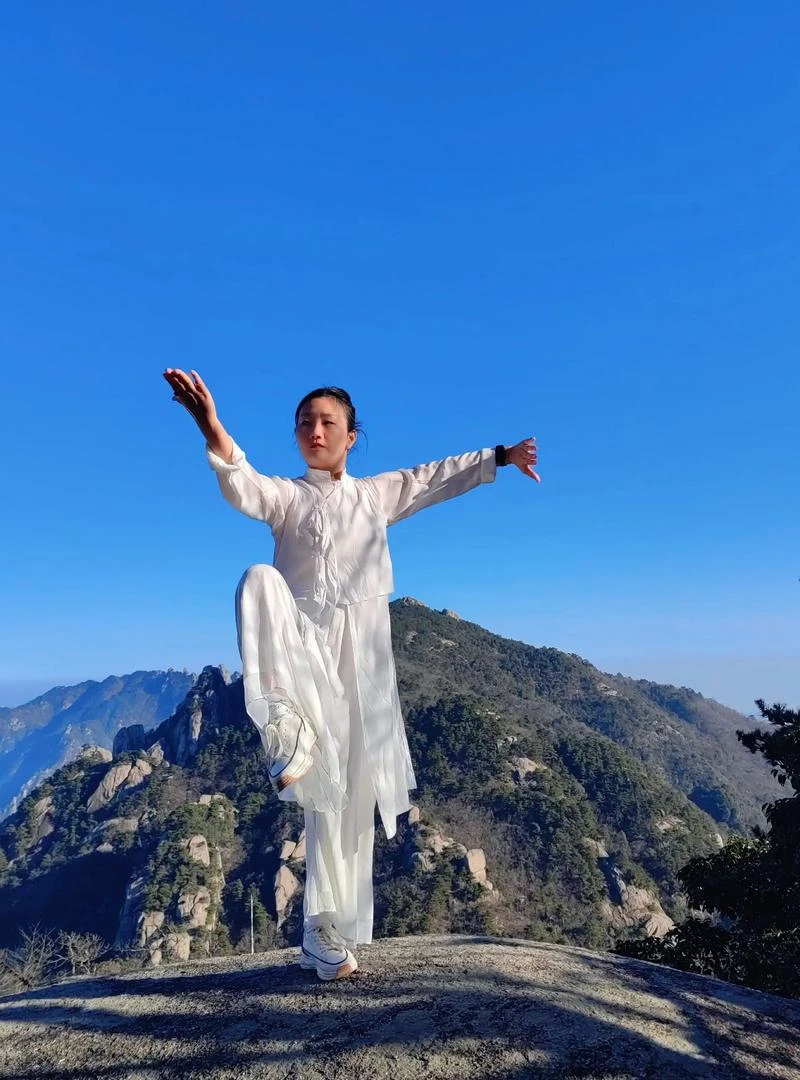
Tai Chi: From Daoist Internal Alchemy to Global Movement
Tai Chi's origins trace back to the Ming and Qing dynasties, deeply rooted in Daoist philosophy, Chinese medical meridian theory, and martial arts. Its evolution reveals:
- Philosophical Foundation: Based on the Yijing's yin-yang theory, emphasizing "From Wuji comes Tai Chi, from Tai Chi emerge the two polarities"
- Technical Development: From Chen Wangting's original Chen-style, major schools emerged including Yang, Wu, Wu (different character), and Sun styles
- Modern Transformation: Shifted from martial application to health emphasis, with standardized competition forms and simplified 24-step routines
Cultural Symbolism: Tai Chi is "philosophy in motion"—each movement embodies cosmic principles of yin-yang transformation and substantial-insubstantial interplay.
The "listening energy" and "neutralizing energy" of push-hands practice represent not just physical skills but metaphors for human interaction.
Baduanjin: The Medicalized Crystallization of Song Dynasty Daoyin
Baduanjin's history is even older, with prototypes found in the Han dynasty Mawangdui Daoyin Charts, evolving into its eight-section set during the Song dynasty (circa 12th century):
- Medical Origins: Directly descended from Traditional Chinese Medicine "daoyin" therapy, aligned with the Yellow Emperor's Classic concept of "harmonizing with heaven and earth, balancing yin and yang"
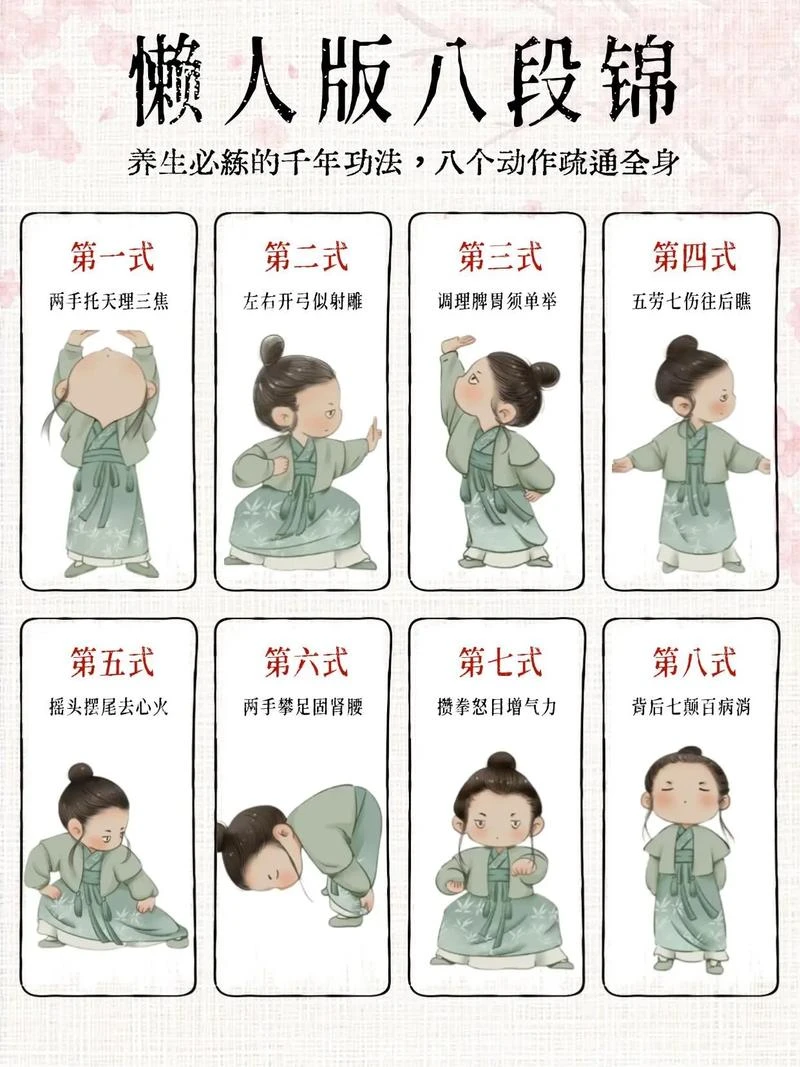
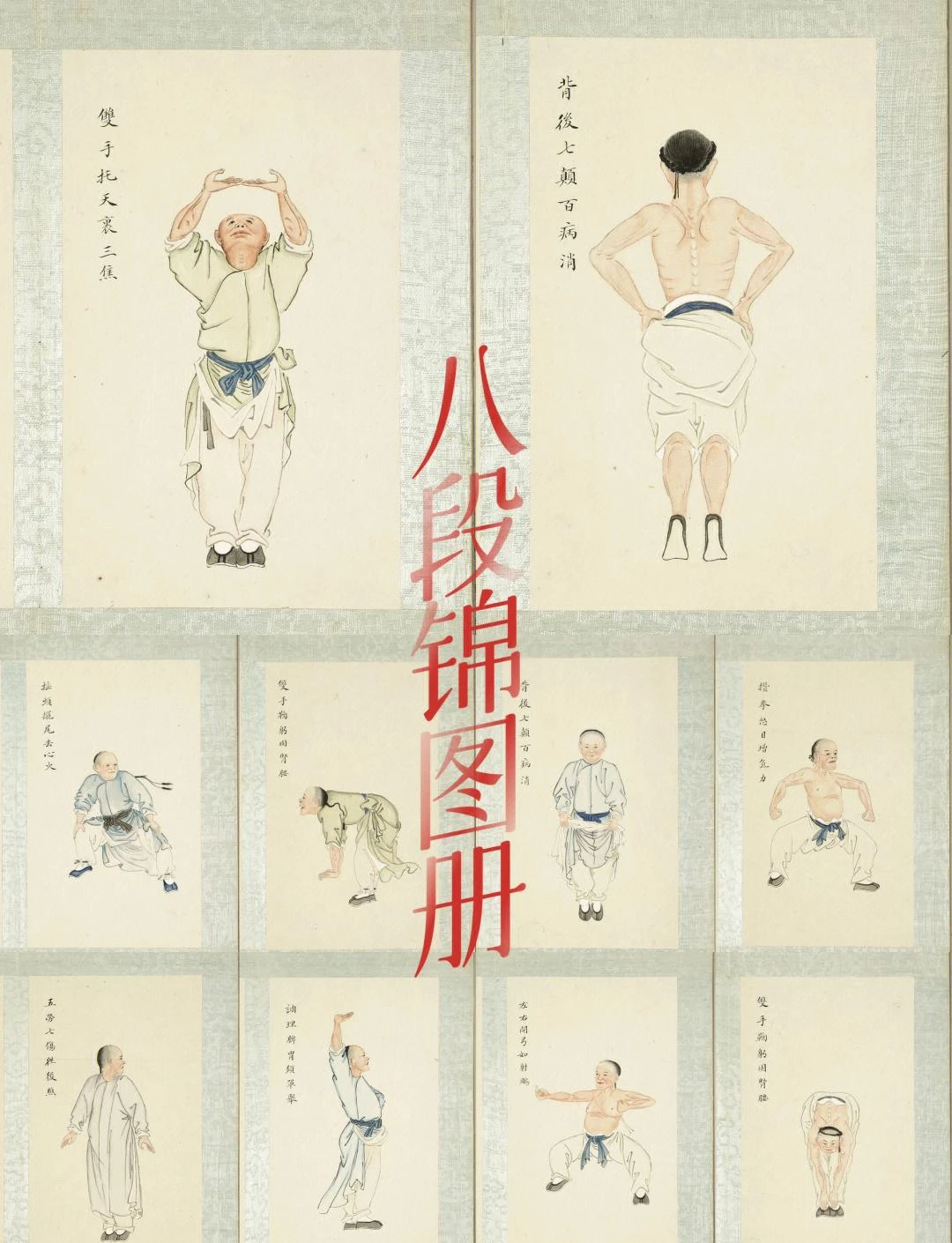
- Practical Orientation: Each posture targets specific organs and meridians, with names indicating functions like "Two Hands Hold Up the Heavens to Regulate the Triple Burner"
- Development: Divided into "Civil" (seated) and "Martial" (standing) versions, with standing Baduanjin now most widely practiced
Cultural Symbolism: Baduanjin embodies the practical "preventive medicine" wisdom of TCM. Its movements act as "physical prescriptions," with each section addressing specific health concerns, reflecting Chinese medicine's systemic approach.
Key Difference: Tai Chi represents "philosophical embodiment," pursuing expression of "the Dao"; Baduanjin represents "medical prescription through movement," pursuing "therapeutic effect." This fundamental distinction shapes all subsequent characteristics.
Biomechanical and Physiological Comparison
Energy Metabolism: Aerobic Endurance vs. Intermittent Engagement
Tai Chi's Metabolic Profile:
- Moderate-intensity continuous aerobic exercise, averaging 40-60% of heart rate reserve
- Typical caloric expenditure: ~120-180 kcal for 30 minutes (68kg individual)
- Metabolic characteristic: Primarily fat oxidation, with prolonged basal metabolic rate enhancement
Baduanjin's Metabolic Profile:
- Low-intensity intermittent exercise, with 10-30 second holds in "tendon-stretching" static tension
- Typical caloric expenditure: ~90-140 kcal under same conditions
- Metabolic characteristic: Activates both fast and slow twitch fibers, stimulates growth hormone secretion, enhances glycogen metabolism
Scientific Validation: A 2024 Journal of Sports Medicine study using indirect calorimetry found Tai Chi sessions utilized 15% higher fat oxidation proportion, while Baduanjin increased muscle microcirculation during holds by 22% more than Tai Chi.
Joint Movement Patterns: Spiral Silk-Reeling vs. Linear Extension
Tai Chi's "Silk-Reeling Energy":
- Multi-plane compound movements: each joint simultaneously flexes-extends, rotates, and laterally bends
- Range of motion: Emphasizes "sequential connection" through kinetic chain from feet to hands
- Protective mechanism: Rotation reduces direct joint compression, particularly beneficial for knee health
Baduanjin's "Tendon-Stretching":
- Multi-directional linear stretches: each movement reaches maximum range in 1-2 planes
- Range of motion: Emphasizes "complete extension" with end-position maintenance
- Protective mechanism: Slow, progressive stretching avoids soft tissue injury from elastic rebound
Breathing Coordination: Reverse Abdominal Breathing vs. Natural Breathing
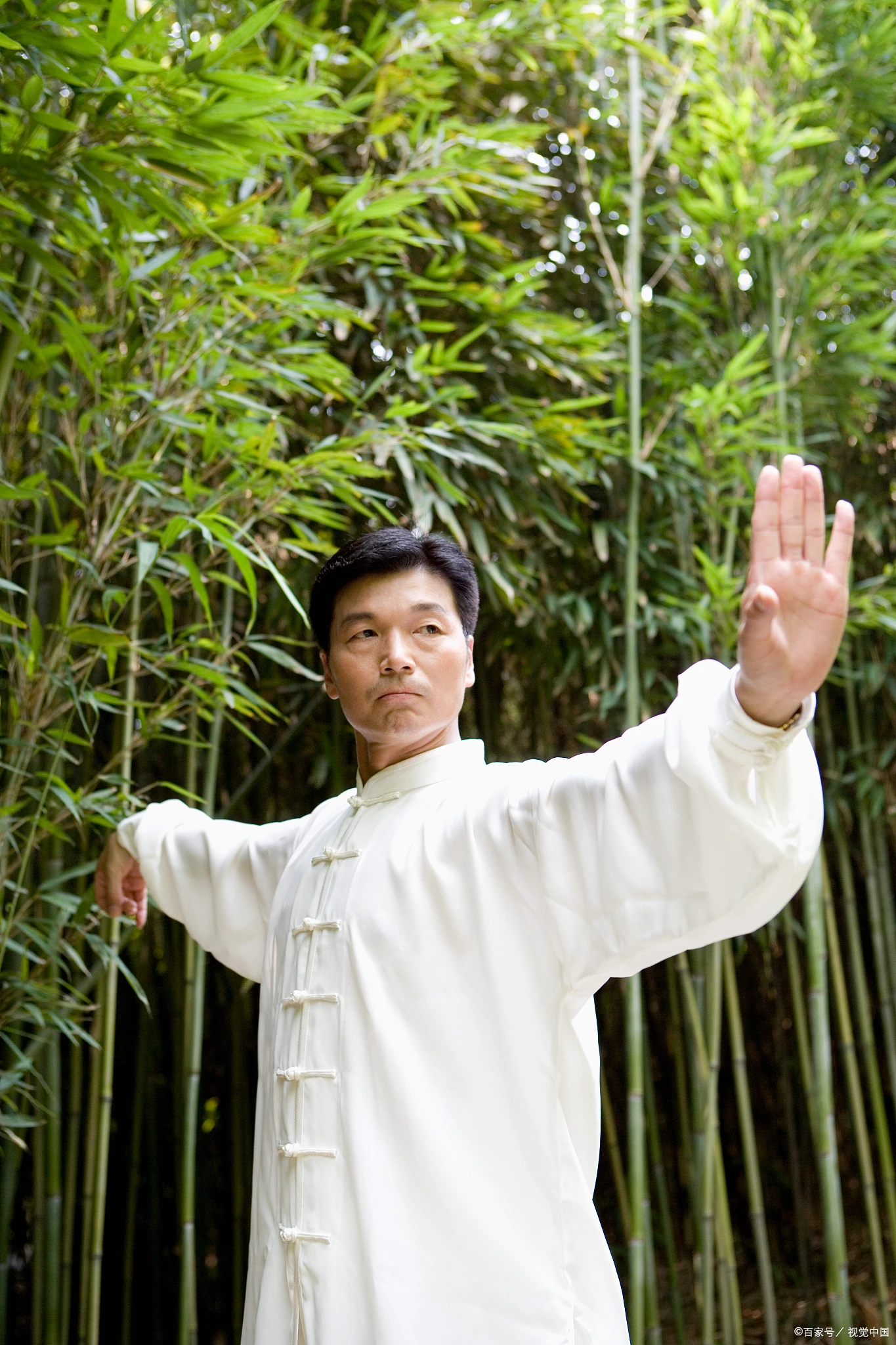
Tai Chi Breathing Technique:
- Reverse abdominal breathing: Abdomen draws in during inhalation, expands during exhalation, increasing diaphragm movement 40-60%
- Coordination principle: "Open-inhale, close-exhale," synchronized with movement's store-release rhythm
- Physiological effect: Significantly increases thoracic negative pressure, promotes venous return, massages abdominal organs
Baduanjin Breathing Method:
- Natural breathing progression: Beginners use natural breath, transitioning to deep breathing coordinated with posture attainment
- Coordination principle: Inhale during stretch, hold or micro-breathe during maintenance, exhale during return
- Physiological effect: Enhances thoracic expansion and pulmonary ventilation efficiency through posture-specific breathing
Deep Analysis: Tai Chi breathing serves as the "power engine," while Baduanjin breathing acts as an "effect amplifier." A 2023 Respiratory Physiology study found advanced Tai Chi practitioners had 18% higher lung capacity than age-matched controls, while Baduanjin practitioners showed 12% higher maximum inspiratory pressure.
Scientific Evidence for Health Benefits
Chronic Disease Management
Hypertension Intervention:
- Tai Chi: American Heart Association's 2024 evidence-based guidelines note regular practice reduces systolic pressure by 7-14 mmHg and diastolic by 4-8 mmHg, attributed to improved baroreflex sensitivity and reduced sympathetic tone.
- Baduanjin: A 2023 Journal of Alternative and Complementary Medicine meta-analysis showed Baduanjin practice for 6 months improved 24-hour ambulatory blood pressure's nocturnal dip by 15%, especially benefiting "non-dipper" patterns.
Diabetes Management Comparison:
- Tai Chi: Improves insulin sensitivity and glucose transporter activity, reducing fasting glucose by 0.8-1.2 mmol/L and HbA1c by 0.5-0.8%.
- Baduanjin: Direct pancreatic massage (as in "Separating Heaven and Earth to Regulate the Spleen and Stomach") enhances β-cell function, particularly suitable for early Type 2 diabetes.
Osteoporosis Prevention:
- Tai Chi: Multi-dimensional weight-bearing stimuli increase lumbar and femoral neck bone density by 1.5-3.8%, reducing fracture risk in seniors by 37%.
- Baduanjin: Specific postures (like "Two Hands Hold the Feet to Strengthen the Kidneys and Waist") stretch stimulates periosteum and osteoblast activity, improving bone quality beyond mere density.
Musculoskeletal System Benefits
Flexibility Improvement Data:
- Tai Chi group: After 12 months, spinal forward flexion increased 40%, shoulder rotation range increased 25%.
- Baduanjin group: Hamstring length increased 30%, thoracic extension improved 35% in comparable time.
Surface Electromyography (sEMG) Analysis:
Research reveals Tai Chi's muscle activation resembles "muscle conversation"—coordinated co-activation of agonists and antagonists; Baduanjin resembles "muscle declaration"—focused mobilization of target muscle groups.
Joint Protection Mechanisms:
- Tai Chi's biomechanical advantage for knees: Rotational buffering during "empty step" to "bow step" transitions reduces coronal plane shear forces by 30-40%, particularly suitable for mild osteoarthritis.
- Baduanjin's spinal protection: Each posture emphasizes "upright alignment," avoiding asymmetrical disc pressure and improving paravertebral muscle balance.
Neuropsychological Regulation
Heart Rate Variability (HRV) Comparison:
Both practices improve HRV (indicating autonomic balance), but through different mechanisms:
- Tai Chi: Increases overall HRV, especially low-frequency components, improving sympathetic-parasympathetic coordination.
- Baduanjin: Significantly enhances high-frequency components, strengthening parasympathetic-dominant relaxation response.
Cortisol Level Changes:
- Morning practice measurements show Tai Chi practitioners experience more gradual, sustained cortisol reduction (18-22% daily decrease).
- Baduanjin practice produces immediate cortisol drop (15% within 30 minutes), with slight afternoon rebound.
Electroencephalography (EEG) Research Insights:
- Tai Chi's "stillness in motion" neural basis: Increased prefrontal α-wave synchrony during practice resembles "meditative state," while sensorimotor θ-wave activity maintains movement control.
- Baduanjin's "focus-relaxation" alternation: γ-wave bursts (focus) during posture holds alternate with increased α-waves (relaxation) during transitions.
Mood Improvement Quantified:
- Tai Chi demonstrates superior effect for generalized anxiety (40% reduction on GAD-7 scale vs. Baduanjin's 28%).
- Baduanjin shows better improvement for mild-moderate depressive symptoms (35% reduction on PHQ-9 vs. Tai Chi's 25%).
Target Populations and Personalized Selection Guide
Age-Specific Recommendations
Seniors (65+):
- Fall prevention首选—Tai Chi: Multi-directional weight shifting and single-leg stances directly train balance. Studies show regular practice reduces fall risk by 45%.
- Baduanjin application: Entry option for those with limited mobility; can serve as Tai Chi warm-up.
Middle-Aged (40-64):
- High stress management needs: Tai Chi's flowing meditation suits high-pressure professionals.
- Metabolic syndrome tendency: Baduanjin's targeted visceral stimulation may be more direct.
Young Adults (18-39):
- Fitness foundation: Baduanjin's "stretching strength" complements strength training.
- Sports injury prevention: Tai Chi's neuromuscular control enhances performance and injury resilience.
Occupational Adaptations
Sedentary Office Workers:
- Significant neck issues: Baduanjin's "Looking Backwards" directly targets cervical-shoulder region.
- Lower back pain: Tai Chi's "centered coccyx" and spiral movements reshape spinal mechanics.
- Recommended routine: Baduanjin micro-sessions during workday (1-2 minutes per section), full Tai Chi practice weekends.
Manual Laborers:
- Muscle fatigue recovery: Baduanjin stretching promotes lactate clearance.
- Asymmetrical work compensation: Tai Chi's symmetrical practice balances body usage.
Special Populations
Pregnant Women:
- Tai Chi: Avoid low stances and single-leg rotations; simplified forms like Cloud Hands work safely (second trimester onward).
- Baduanjin: Caution with "Two Hands Hold Up Heavens" and "Rising on Toes"; gentle movements like "Separating Heaven and Earth" recommended.
- General principle: Avoid breath-holding and extreme stretches; prioritize comfort, reduce standing postures in third trimester.
Chronic Pain Patients:
- Fibromyalgia: Tai Chi's gentle aerobic nature outperforms Baduanjin's static holds.
- Osteoarthritis: Choose by location—knee OA favors Tai Chi, spinal OA may try Baduanjin.
Mental Health Needs:
- PTSD: Tai Chi's flow and grounding aids bodily re-awareness.
- ADHD: Baduanjin's clear segmental structure supports executive function development.
Contemporary Interpretation of Cultural Philosophy and Neuroscience
The Neuroscience Behind "Use Mind, Not Force"
- This core Tai Chi principle corresponds to modern findings:
- Motor cortex reorganization: Mental rehearsal activates similar neural networks as physical execution.
- Cerebellar-thalamic-cortical circuit optimization: Reduces unnecessary muscle co-contraction by 30-50%.
- Mirror neuron system involvement: Observing others' practice partially activates one's own motor planning regions.
The Mind-Body Interaction of "Three Regulations Unified"
- Regulating body, breath, and mind isn't just traditional rhetoric—it has defined physiological pathways:
- Vagal nerve pathway: Deep, slow breathing directly stimulates vagus nerve, triggering relaxation response.
- Proprioception-emotion connection: Specific postures alter proprioceptive input, affecting limbic system emotional processing.
- Default mode network modulation: Present-moment focus reduces "mental time travel," decreasing anxiety rumination.
Modern Transformation of Daoist "Guarding the One" and Medical "Daoyin"
- Attention training value of "guarding the one": In our multitasking digital age, sustained single-focus ability becomes scarce resource.
- Embodied cognition significance of "daoyin": Specific movement patterns directly shape cognitive habits and emotional response tendencies.
- Integrated application: Tai Chi cultivates "fluid awareness within wholeness"; Baduanjin cultivates "precise awareness within structure."
Modern Innovative Applications and Practice Plans
Innovative Integration in Sports Rehabilitation
Clinical Case: Post-ACL reconstruction rehabilitation protocol:
- Phase 1 (weeks 2-4): Modified seated Baduanjin for maintaining joint mobility.
- Phase 2 (months 1-3): Tai Chi weight-shifting without load.
- Phase 3 (months 3-6): Complete Tai Chi form for restoring multi-dimensional dynamic stability.
Parkinson's Disease Management:
- Tai Chi improves freezing of gait and postural control.
- Baduanjin's "Swaying Head and Buttocks" alleviates dystonia.
- Combined approaches show 40% improvement on UPDRS scale.
Office Micro-Practice Customization
3-Minute "Energy Reset" Based on Baduanjin:
- Seated "Two Hands Hold Up Heavens": Improves breathing, activates diaphragm (45 seconds).
- Standing "Drawing Bow to Shoot Eagle": Opens chest, counters rounded shoulders (45 seconds).
- Seated "Swaying Head and Buttocks": Relaxes neck-shoulders, improves cerebral circulation (45 seconds).
- Standing "Rising on Toes": Stimulates soles, increases alertness (45 seconds).
5-Minute "Attention Restoration" Based on Tai Chi:
- Cloud Hands (simplified): Standing or seated, activates peripheral vision (1 minute).
- Step Back and Repulse Monkey: Spatial awareness backwards, breaks mental fixation (1 minute).
- Parting Wild Horse's Mane: Left-right alternation, balances cerebral hemispheres (1 minute).
- Standing Meditation: Return to center, resets nervous system (2 minutes).
Technology-Assisted Learning Systems
Wearable Device Applications:
- Inertial Measurement Units (IMUs) provide real-time joint angle feedback.
- sEMG clothing monitors muscle activation balance.
- Pressure-sensitive insoles assess weight distribution and stability.
Virtual/Augmented Reality Enhancement:
- Tai Chi VR environments offer 360-degree master perspectives.
- Baduanjin AR overlays display meridian and muscle activation heat maps.
- Biofeedback gamification increases practice adherence.
Decision Matrix
Personalized Decision Matrix
Based on your primary health goal, consult this matrix:
| Health Goal | Recommended Priority | Complementary Practice | Key Considerations |
|---|---|---|---|
| Lower blood pressure, reduce anxiety | Tai Chi | Baduanjin | Tai Chi requires 3+ months for noticeable effects |
| Improve flexibility, reduce stiffness | Baduanjin | Tai Chi | Moderate stretching intensity, avoid overextension |
| Fall prevention, balance enhancement | Tai Chi | Modified Baduanjin | Start with high stances, gradually lower |
| Chronic lower back pain relief | Combination | - | Avoid during acute phase, begin during remission |
| Metabolic improvement, blood sugar control | Baduanjin primary | Tai Chi secondary | Best combined with dietary management |
| Post-surgery rehabilitation | Therapist-designed | - | Never self-determine movement ranges |
Conclusion: Wisdom Beyond Binary Choice
After 5000+ words of analysis, we return to the initial question: Tai Chi or Baduanjin—which delivers better fitness results? The answer: This isn't an either-or competition, but two different dimensions of mind-body wisdom.
Tai Chi resembles flowing philosophical poetry, cultivating holistic coordination, balance, and inner awareness through slow continuity. Baduanjin resembles precise physical prescriptions, addressing specific issues and restoring structural function through defined segments.
The former excels at "cultivation," the latter at "correction"; the former emphasizes "process," the latter "outcome."
The wisest modern approach may be: Use Baduanjin as the body's "daily maintenance tool," and Tai Chi as the mind-body's "deep upgrade system." Apply Baduanjin's specificity to concrete health challenges, and Tai Chi's integration to enhance overall life quality.
Whichever you choose—or if you combine both—what matters most is beginning and sustaining practice. Traditional wisdom's value lies not in ancient texts, but in the bodily experience of modern daily practice.
After reading this article, perhaps stand up and spend five minutes trying the first Baduanjin posture or Tai Chi movement—let ancient wisdom continue breathing, flowing, and evolving through your body in this era.
Which practice will you try today? Share your experiences and questions in the comments.
References:
- American College of Sports Medicine. (2024). Tai Chi for Chronic Conditions: An Evidence Review.
- National Center for Complementary and Integrative Health. (2023). Research on Baduanjin: Clinical Applications.
- Journal of Bodywork and Movement Therapies. (2024). Comparative Biomechanics of Tai Chi and Baduanjin.
- Chinese Journal of Integrative Medicine. (2023). Meta-analysis of Baduanjin for Metabolic Syndrome.
- World Health Organization. (2023). Traditional and Complementary Medicine in Health Systems.
This article was written by Taichiwuji.com's expert team, based on 10+ years of teaching experience and current clinical research. We're dedicated to interpreting traditional wisdom through scientific lens, making Tai Chi philosophy accessible to global health seekers.
Engagement Invitation:
- Have you practiced Tai Chi or Baduanjin? Share your experience!
- What health concerns interest you most? What would you like explored deeper?
- Subscribe to our blog for weekly science-based interpretations of traditional wellness.
Disclaimer: This content is for educational purposes and does not substitute professional medical advice. Consult your healthcare provider before starting any new exercise program, especially if you have health conditions or concerns.
Frequently Asked Questions
What are the fundamental differences in origins?
Tai Chi originated from martial arts-Daoist cultivation fusion, focusing on "martial skill" and "the Dao"; Baduanjin originated from medical daoyin, focusing on "medicine" and "health." The former pursues "entering the Dao through martial practice," the latter "movement as medicine."
How do their mechanisms for improving qi and blood circulation differ?
Tai Chi promotes venous and lymphatic return through "worm pump" effect from spiral movements; Baduanjin increases capillary recruitment through end-posture holds. The former resembles "river flow," the latter "reservoir filling."
How should beginners choose where to start?
Poor coordination, seeking quick results: Start with Baduanjin.
Athletic background, seeking deep mind-body experience: Can begin with simplified Tai Chi.
Optimal path: Learn Baduanjin for 3 months to develop body awareness, then transition to Tai Chi.
Which is best for middle-aged and older adults?
Under 70, mobile seniors: Tai Chi superior for fall prevention.
Over 75, frail individuals: Modified seated Baduanjin safer.
Key principle: Enjoyment matters more than perfection.
Can they be combined? How?
Ideal combination: Baduanjin in morning to "awaken" body, Tai Chi in evening to "calm" mind.
Weekly schedule: Baduanjin 3-4 times, Tai Chi 2-3 times, with rest days.
Advanced approach: Use Baduanjin postures as Tai Chi-specific warm-ups.
Common errors and corrections (key movements exemplified)
Tai Chi "Cloud Hands" error: Only arm circles, lacking waist-hip initiation.
Correction: Imagine waist as center, arms as whip ends, power initiating from feet.
Baduanjin "Two Hands Hold Up Heavens" error: Shoulders hunching, neck tension, forced breathing.
Correction: Imagine string lifting crown of head, shoulders sink down, exhale fully at maximum lift.
Special considerations for chronic conditions
Hypertension: Avoid prolonged head-below-heart positions, breathe naturally without straining.
Diabetes: Beware hypoglycemia, avoid practicing fasted, keep glucose source available.
Arthritis: Pain is signal not challenge, move within pain-free range.
Recommended frequency and duration
Maintenance: 3-4 sessions weekly, 20-30 minutes each.
Chronic condition management: 5-6 sessions weekly, 30-45 minutes each.
Critical principle: 10 minutes daily outperforms 2 hours weekly—consistency trumps intensity.
Seasonal adjustments
Summer: Practice early morning or evening, avoid heat, slightly reduce duration.
Winter: Thorough warm-up, focus on internal energy rather than external range.
Rainy indoor practice: Tai Chi emphasizes mental flow, Baduanjin emphasizes breath depth.
How to gauge effectiveness?
Subjective indicators: Improved sleep, increased energy, stabilized mood.
Objective measures: Lower resting heart rate, stable blood pressure, increased flexibility.
Avoid fixating on single metrics, focus on overall life quality enhancement.
Does Tai Chi's martial function still matter today?
Martial training's value lies not in "fighting" but in "timing": sense of opportunity, spatial awareness, response patterns. These translate to workplace adaptability, driving anticipation, and interpersonal boundary perception.
Modern medical interpretation of Baduanjin's eight movements
"Two Hands Hold Up Heavens": Improves thoracic mobility, promotes lymphatic drainage.
"Drawing Bow": Prevents rounded shoulders, strengthens respiratory muscles.
"Separating Heaven and Earth": Massages internal organs, improves digestion.
"Looking Backwards": Relaxes neck-shoulders, regulates autonomic nervous system.
"Swaying Head and Buttocks": Enhances core stability, relieves lower back tension.
"Two Hands Hold Feet": Stretches back, stimulates adrenal function.
"Clenching Fists with Angry Eyes": Increases grip strength, improves peripheral circulation.
"Rising on Toes": Activates plantar reflexes, enhances balance.
Learning resources
Beginner videos: General Administration of Sport's "Standard Baduanjin," "24-Step Simplified Tai Chi."
Advanced books: The Science and Art of Tai Chi, Baduanjin: Modern Interpretation of Millennial Daoyin.
Community support: Local park morning practice groups, specialized workshops.
Contemporary value of cultural transmission
In globalization, these practices serve as "mobile cultural ambassadors":
Tai Chi: Conveys Chinese philosophical harmony and non-linear thinking.
Baduanjin: Demonstrates TCM's "preventive treatment" medical paradigm.
Shared value: Provides "slowing down" somatic techniques in fast-paced world.
Future trends
Personalized adaptation: Movement prescriptions based on genetic testing and wearable data.
Digital therapy integration: Insurance-covered complement to conventional medicine.
Cross-cultural fusion: Dialogue with yoga, Pilates, forming new mind-body training paradigms.