Tired of Counting Sheep? How Tai Chi Might Be Your Path to Better Sleep
Friend, let me ask you a question. Are you reading this in the middle of the night, staring at the ceiling again? You’ve tried everything. Maybe you’ve cut out caffeine, bought a fancy new mattress, or downloaded a meditation app. But that deep, restorative sleep still feels out of reach.
What if the solution isn't about trying harder, but about moving smarter?
I want to talk to you about an ancient practice that's gaining serious traction in modern sleep science: Tai Chi. You might have seen it in parks – those slow, graceful movements that look like a dance with the air. It’s not just for relaxation. A growing body of compelling research, including a significant study published in the prestigious British Medical Journal (BMJ), suggests that practicing Tai Chi can be as effective as cognitive behavioral therapy (CBT) – the gold-standard psychological treatment – for improving chronic insomnia.
Yes, you read that correctly. This isn't just a "feel-good" theory. It's a finding from a rigorous Tai Chi insomnia study involving adults over 50 with long-term sleep problems. The participants who practiced Tai Chi for just one hour, twice a week, saw dramatic improvements that rivaled those of people undergoing intensive CBT.
So, before you resign yourself to another restless night, let's explore how this works. The magic of Tai Chi for sleep lies in its unique combination of three elements:
- Gentle Physical Movement: It's a low-impact exercise that doesn't overstimulate your body before bed.
- Meditative Focus: It pulls your mind away from the day's anxieties and tomorrow's to-do lists.
- Conscious Breathing: This is the secret weapon that directly calms your nervous system.
In this guide, we’ll break down the science, walk you through a simple routine, and show you how to make Tai Chi your most powerful tool for reclaiming your nights.
The Proof is in the Practice: What the Tai Chi Insomnia Research Shows
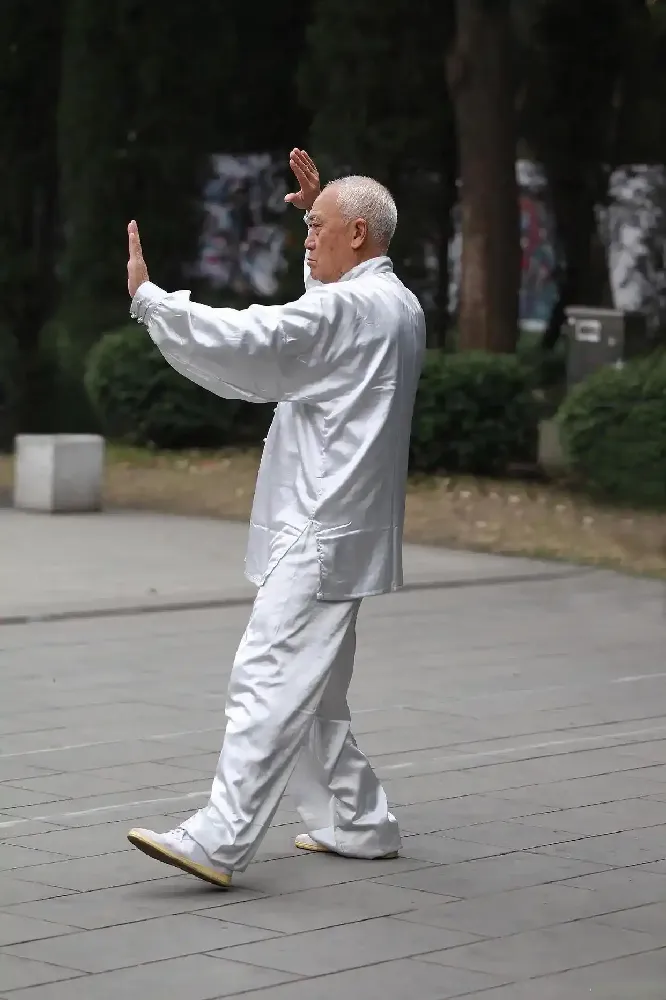
Let's get straight to the good stuff. When we talk about the effects of Tai Chi on sleep, we're not dealing with vague promises. We're talking about hard, measurable data. The BMJ study I mentioned is a great place to start because its findings are so clear.
Researchers from the University of Hong Kong took a group of people, all over 50 and all struggling with chronic insomnia, and split them into groups. One group did Tai Chi. The results were astounding.
Here’s what the Tai Chi practitioners experienced:
- They slept longer. On average, they gained over 48 minutes of total sleep time per night.
- They woke up less. The time they spent awake after initially falling asleep dropped by more than 30 minutes.
- They fell asleep faster. The time it took them to drift off (sleep latency) was shortened by about 22 minutes.
But how does this stack up against other common activities? Another fascinating part of the research compares Tai Chi to other exercises.
| Activity | Key Benefit for Sleep |
|---|---|
| Yoga | Can increase total sleep time by nearly 2 hours. |
| Brisk Walking / Jogging | Significantly reduces the overall score on the insomnia severity index. |
| Tai Chi | Shows a marked improvement in the Pittsburgh Sleep Quality Index (PSQI), a comprehensive measure of sleep quality, not just duration. |
This is a crucial point. The effects of Tai Chi aren't just about knocking you out. It's about improving the overall quality of your sleep – making it deeper, less fragmented, and more restorative.
The long-term data is even more convincing. One study showed that after a consistent Tai Chi practice, a remarkable 34.4% of elderly participants saw their insomnia resolve completely.
Science is giving us a green light. A Tai Chi insomnia clinical trial isn't just looking at a placebo effect; it's measuring real, physiological changes that lead to better sleep.
And the best part? It's a therapy with no side effects, one that you can control entirely by yourself.
Beyond Counting Sheep: The "Why" Behind Tai Chi and Sleep Improvement
So, we've seen the numbers. But how can slow, deliberate movements possibly rewire your sleep? It’s not magic—it’s science and ancient wisdom working in concert. The physiological mechanisms of Tai Chi target the very root causes of insomnia.
Most insomnia is driven by a nervous system that's stuck in "fight-or-flight" mode. Your body is flooded with stress hormones like cortisol, your heart rate is up, and your mind is racing—the exact opposite of what you need for sleep.
Here’s how Tai Chi directly counteracts this:
1. It Resets Your Nervous System
This is the biggest piece of the puzzle. Tai Chi is often called "moving meditation." The combination of focused movement and deep, rhythmic breathing control acts as a powerful switch. It tells your sympathetic nervous system (the gas pedal) to stand down and engages your parasympathetic nervous system (the brakes). This shift is measurable: your heart rate slows, your blood pressure lowers, and your body begins to produce calming neurotransmitters. It’s like a signal to your entire being: "The danger has passed. It is safe to rest."
2. It Soothes an Overactive Mind
You can't just tell your brain to stop worrying. But you can give it a new job. Tai Chi requires just enough coordination and mental attention to pull your focus away from anxious thoughts and into the present moment—the feeling of your feet on the floor, the slow sweep of your arms. This mindful focus is a form of nervous system regulation, giving the cognitive part of your brain a much-needed break.
3. It Improves Circulation and Eases Physical Tension
The gentle, weight-shifting movements of Tai Chi act as a pump for your blood circulation, without the jarring impact of running. This helps deliver oxygen throughout your body and can ease the minor aches and tensions that often keep you awake.
Furthermore, the specific reverse abdominal breathing technique common in Tai Chi acts as an internal massage for your organs, promoting relaxation from the inside out.
The Tai Chi Wuji Perspective: Not Just Movement, But Energetic Repatterning
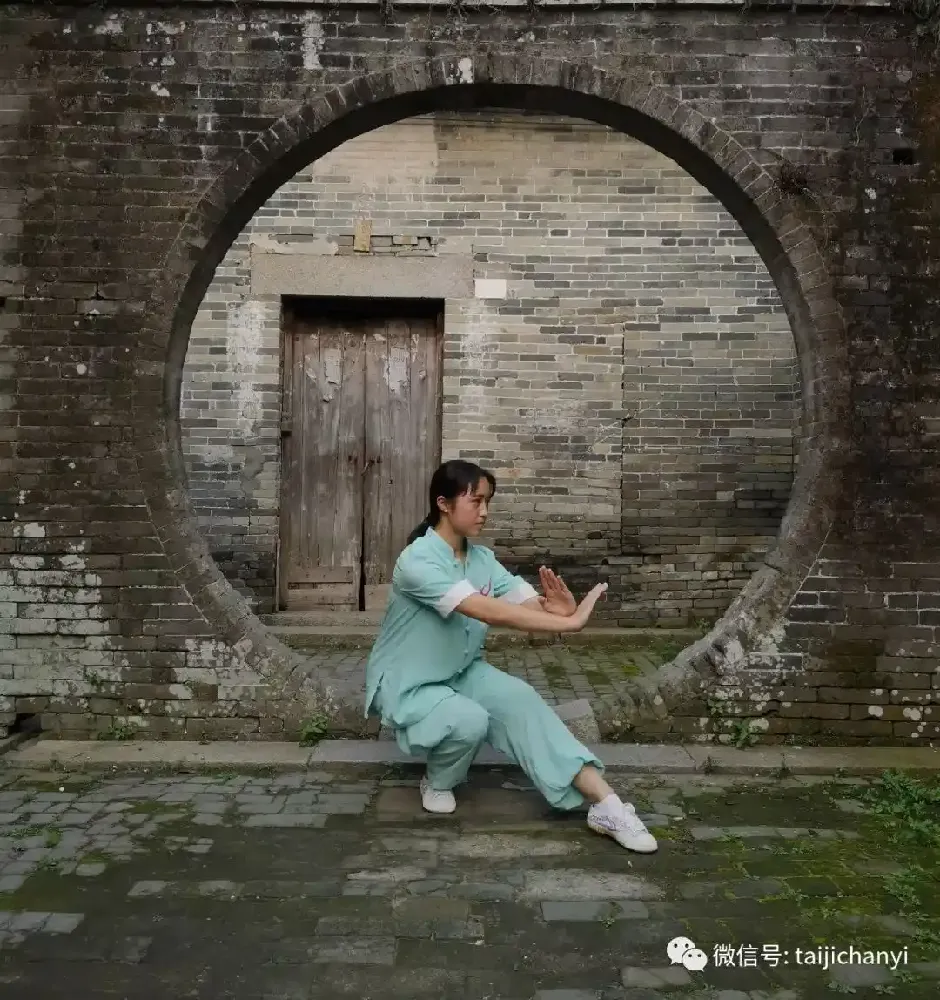
At Tai Chi Wuji, our approach to Tai Chi for insomnia goes a step beyond the physical mechanics. While the scientific explanations are vital and true, we also work with the traditional concept of "Qi" or vital energy.
Think of your energy body after a stressful day. It's often scattered, chaotic, and buzzing—much like your mind. Lying in bed with this kind of energetic static makes sleep impossible.
Here is our exclusive viewpoint: The practice of Tai Chi, particularly through our curated sequences, is not just exercise. It is a process of gathering scattered energy and repatterning it into a calm, coherent flow.
- The "Wuji" State: The name of our school, "Wuji," refers to the primordial state of undifferentiated wholeness and infinite potential that exists before the dynamism of Yin and Yang. Our practice aims to guide you back toward this state of profound stillness and balance.
- How It Works in Practice: When you perform a movement like "Cloud Hands," you are not just moving your arms in a circle. You are gathering the fragmented energy in your space and within your body, weaving it back into a smooth, continuous loop. The closing form, where you bring your hands to the lower abdomen (the "Dantian"), is the final, crucial step of "storing" this now-calm energy, so it doesn't keep you awake.
This is why timing and intention are so critical. Practicing with this mindful intent two hours before bed acts as an energetic wind-down, systematically preparing your entire system—body, mind, and energy—for a night of deep, uninterrupted sleep.
It’s the difference between abruptly turning off a racing car engine and gently guiding it to a smooth, complete stop.
Your Nightly Sanctuary: A Simple Tai Chi Wuji Routine for Better Sleep
Knowing the "why" is powerful, but the real magic happens when you start practicing. You don't need to become a master or learn a complicated 108-form routine. The key is consistency and mindful intention.
Here is a simple, three-part routine you can start tonight, built on Tai Chi Wuji principles. It's designed to signal to your body and mind that the day is over and it's time to shift into rest mode.
Best Practice Tip: Perform this routine in a quiet space, about 60-90 minutes before you plan to sleep. Wear loose, comfortable clothing.
The Foundation - Standing like a Mountain (Wuji Stance)
This is perhaps the most important part of the entire practice. We begin by finding our center and cultivating stillness.
What to Do:
- Stand with your feet parallel, shoulder-width apart.
- Soften your knees—don't lock them. Imagine your joints are loose and relaxed.
- Let your arms hang naturally by your sides, shoulders relaxed down.
- Gently tuck your chin slightly, as if you're holding a pearl between your chin and your neck. This aligns your spine.
- Close your eyes or soften your gaze.
What to Focus On (The Tai Chi Wuji Insight):
This posture is named after our school for a reason. Here, you are cultivating the "Wuji" state—returning to zero, to neutral. Feel the weight of your body evenly distributed through the soles of your feet. Imagine roots growing down from your feet into the earth, grounding you.
Breathe naturally into your lower abdomen. Spend just 2-3 minutes here, simply noticing your breath and releasing the day's tensions.
This single step alone can dramatically lower your nervous system's arousal.
The Movement - Weaving Your Energy with "Cloud Hands"
Now, we gently introduce movement to circulate and smooth out your energy.
What to Do:
- From your standing posture, shift your weight to your left leg.
- As you shift, your right foot should feel light. You can slightly lift the heel if it's comfortable.
- Simultaneously, bring your right hand across your body at about chest height, palm facing inward. Your left hand will naturally drift down in front of your lower abdomen, palm facing the ground.
- Now, slowly shift your weight to your right leg. As you do this, your left hand will rise up (palm facing inward) and your right hand will sweep down (palm facing down). It's a continuous, flowing motion, like stirring a large, gentle pot of energy in front of you.
- Continue this "weaving" motion for 2-3 minutes, following the rhythm of your breath. Let the movement be led by your waist turning, not just your arms.
What to Focus On (The Tai Chi Wuji Insight):
As you practice Cloud Hands, don't just see it as a physical exercise. Visualize that you are gathering all your scattered, frantic thoughts and energy with your hands. You are weaving them back into a single, calm, and continuous flow around your body.
This is the "repatterning" in action. The movement should feel effortless, as if the air around you has become thick and is helping you move.
The Integration - Sealing in the Calm (Closing Form)
This final step is non-negotiable. It's how you "keep" the calm you've just created and carry it with you to bed.
What to Do:
- Slowly come to a stop after your last Cloud Hands movement.
- Bring your feet parallel again, returning to the Wuji Stance.
- As you inhale softly and naturally, slowly raise your hands in front of you, palms up, as if gently lifting a ball of energy.
- When your hands reach shoulder height, begin to exhale slowly. Turn your palms to face the ground.
- Gently press your hands down in front of you, as if guiding that ball of energy down into your lower abdomen, about two inches below your navel—this area is called the "Dantian" in Traditional Chinese Medicine.
- Rest your hands there for a moment. Feel the warmth and stillness.
What to Focus On (The Tai Chi Wuji Insight):
With the closing form, you are storing the calm, coherent energy you've cultivated directly into your core. Imagine you are placing all the peace and quiet from your practice into a battery in your belly—a reserve you can draw from throughout the night.
Do not skip this. It completes the practice and prevents the energized, scattered feeling that can sometimes come from incomplete meditation or exercise.
Your Starter Plan:
- Frequency: Aim for this 10-minute routine daily.
- Timing: The "sweet spot" is 60-90 minutes before bed.
- Mindset: Focus on smoothness and intention, not perfection.
Making It Work For You: Avoiding Pitfalls and Personalizing Your Practice
Now you have a powerful tool at your disposal. But as with any new skill, success lies in avoiding common mistakes and tailoring the practice to your specific needs. At Tai Chi Wuji, we often see enthusiastic beginners hindered by avoidable pitfalls.
Let's clear these up to ensure your practice is both safe and effective.
Common Missteps (And How to Correct Them)
The "Lower is Better" Myth
- The Trap: Thinking a super-low stance means a better workout.
- The Tai Chi Wuji View: Tai Chi is about "song" (relaxation) and stability, not how low you can go. A forced, deep stance creates muscle tension and restricts breathing—the exact opposite of our goal.
- The Right Way: Maintain a "comfortable height." Your knees should always be behind your toes, and you should be able to breathe freely and feel at ease.
The "Softer is Better" Misunderstanding
- The Trap: Flopping your limbs around like a ragdoll, mistaking this for being relaxed.
- The Tai Chi Wuji View: We strive for "song er bu bai"—relaxed but not collapsed. It's a lively, alert relaxation, like a willow tree swaying in the wind: rooted yet yielding.
- The Right Way: Maintain a subtle sense of alertness in your movements. Imagine your bones are aligned and your muscles are draped over them like silk—neither rigid nor limp.
Practicing Too Vigorously Before Bed
- The Trap: Trying to "squeeze in" a long or intense session right before bed to maximize benefits.
- The Tai Chi Wuji View: Evening practice is about "leading the Qi back to its source"—consolidating your energy. A vigorous practice can activate your system, having the opposite effect.
- The Right Way: Stick to your gentle routine. If you feel particularly wired in the evening, spend more time on Standing like a Mountain (Wuji Stance) and the Closing Form, and less on the moving parts.
Tailoring Tai Chi to Your Type of Sleeplessness
Not all insomnia is the same. Your pre-bed Tai Chi practice can be slightly adjusted to target your primary struggle more effectively.
If Your Mind Won't Shut Off (Psychogenic Insomnia):
- Your Focus: Amplify the "mental intention" part.
- What to Do: During Cloud Hands, add a simple count to your breath and movement. For example, "inhale" as the hand rises, "exhale" as it sweeps down. This gentle cognitive task occupies the mental space where anxiety likes to reside.
If You Have Physical Discomfort or Pain (Somatic Insomnia):
- Your Focus: Soothe the body through improved blood circulation.
- What to Do: Place more attention on Reverse Abdominal Breathing. As you inhale gently, draw the abdomen in slightly; as you exhale, release it fully. Visualize your breath being directed to areas of tension or pain, "breathing into" them to promote release.
If You're Sensitive to Your Environment (Environmental Insomnia):
- Your Focus: Create an internal "quiet zone."
- What to Do: During Standing like a Mountain, don't fight the outside traffic noise or your neighbor's TV. Instead, practice "listening" to the sounds inside your body—your heartbeat, your breath. Let the external noise become the background, and your internal sensations the main melody.
An Important Note: While Tai Chi for insomnia is highly effective for many, it is not a substitute for professional medical advice. If your sleeplessness is related to an underlying physical illness like hyperthyroidism or is chronic and severe, please consult a healthcare provider.
Tai Chi can be a wonderful complementary therapy, but it should not be seen as a sole cure-all.
Your Journey to Restful Nights Starts Now
We began this journey by talking about the frustration of staring at the ceiling, trapped in the cycle of sleeplessness. We've explored the compelling scientific evidence from Tai Chi insomnia research, including clinical trials that show its effects can rival established therapies like CBT.
We've delved into the "how"—the physiological mechanisms of Tai Chi that calm your nervous system, regulate your breath, and repattern your energy.
Most importantly, we've given you a practical, accessible path forward. You now have a simple Tai Chi Wuji routine and the understanding to personalize it, avoiding common pitfalls to make it a sustainable part of your life.
The final, and most crucial, ingredient is you.
The profound, long-term benefits—consistently falling asleep faster, staying asleep longer, and waking up truly refreshed—are not granted by reading alone. They are earned through practice. The effects of Tai Chi on sleep are cumulative.
A study we cited earlier showed that participants who stuck with it for over three months saw the most dramatic and lasting results.
This isn't about achieving perfection in the Cloud Hands movement tonight.
It's about showing up for yourself. It's about spending ten minutes practicing Tai Chi with mindful intention, rather than ten minutes scrolling in bed while worrying about not sleeping.
So, here is our final invitation to you:
Tonight, 90 minutes before you want to sleep, find a quiet space. Stand still for just two minutes. Breathe.
Then, try a few minutes of gentle, weaving Cloud Hands.
Finally, seal it in with the Closing Form. That's it. You will have taken the first, most significant step in reclaiming your nights.
Your journey to overcoming insomnia and achieving deep, natural rest doesn't require a miracle. It requires a method. That method is Tai Chi, and your journey starts with a single, gentle breath.
Ready to begin? Explore more beginner-friendly guides and the philosophy behind our practice at https://www.taichiwuji.com/en/blog.
Frequently Asked Questions: Tai Chi for Insomnia
Is there real scientific proof that Tai Chi helps with insomnia?
Yes, absolutely. Significant research, including a randomized clinical trial published in the British Medical Journal (BMJ), has shown that regular Tai Chi practice can be as effective as Cognitive Behavioral Therapy (CBT) for improving chronic insomnia in adults. These Tai Chi insomnia studies document measurable improvements, including increased total sleep time, reduced time spent awake during the night, and better overall sleep quality scores on the Pittsburgh Sleep Quality Index (PSQI).
I'm not flexible or athletic. Can I still practice Tai Chi for sleep?
Definitely. Tai Chi is low-impact, gentle, and adaptable to any fitness level. The Tai Chi Wuji approach emphasizes mindful intention and relaxed, natural movements over physical prowess or flexibility. The routine provided in this article is designed specifically for beginners and focuses on calming the nervous system, not on physical exertion.
How is Tai Chi different from just stretching before bed?
While stretching addresses physical tension, Tai Chi is a holistic mind-body practice. It uniquely combines three elements: gentle movement to release physical tension, meditative focus to quiet a racing mind, and conscious breathing to directly regulate the nervous system. This combination is what makes it so powerful for addressing the root causes of insomnia, particularly those related to stress and anxiety.
What time of day is best to practice for sleep benefits?
The ideal window is during the evening, about 60 to 90 minutes before your intended bedtime. Practicing during this period, in the Tai Chi Wuji view, allows your body and energy to wind down completely. It's crucial to avoid practicing too late or too vigorously, as this can sometimes be stimulating rather than calming.
How long before I can expect to see results in my sleep?
Many people report feeling a sense of calm and relaxation immediately after a session. However, for lasting changes in sleep patterns, consistency is key. Most clinical trials on Tai Chi for insomnia show that significant, measurable improvements in sleep quality, such as sleeping longer and waking up less frequently, are typically observed after 8 to 12 weeks of regular practice.
Can I do this routine right in my bed?
While you can perform the breathing and mindfulness components anywhere, it's highly recommended to do the gentle standing movements (like the Wuji Stance and Cloud Hands) beside your bed, not in it. This helps your brain associate the bed strictly with sleep, strengthening your sleep cues. The final Closing Form can be done standing or even sitting on the edge of the bed before you lie down.