Let's be honest. When you first try Zhan Zhuang, or Tai Chi standing meditation, it feels a bit strange.
You're just... standing there. Your mind races, your legs might tremble, and you wonder, "Am I even doing this right? What am I supposed to feel?"
You're not alone.
Many practitioners struggle with this silent, static practice. They get lost in minor adjustments or try to endure it like a tough workout. But here’s the secret: mastering Zhan Zhuang isn't about gritting your teeth. It's about aligning three simple pillars: Posture, Presence, and Patience.
Do these well, and your body will tell you you're on the right path through three undeniable golden standards: effortless breathing, deep warmth, and a quiet, joyful mind.
Forget complex theories. Let's talk about how to actually get there.

Pillar 1: Build Your Frame – The Art of Relaxed Alignment
Think of your body as a tent. If the poles (your skeleton) are misaligned, the fabric (your muscles) has to strain to hold everything up. Your first job is to set up the poles correctly so the fabric can relax. This is "Tiao Xing" – adjusting your form.
Don't overcomplicate it. Follow these steps to find your natural stance:
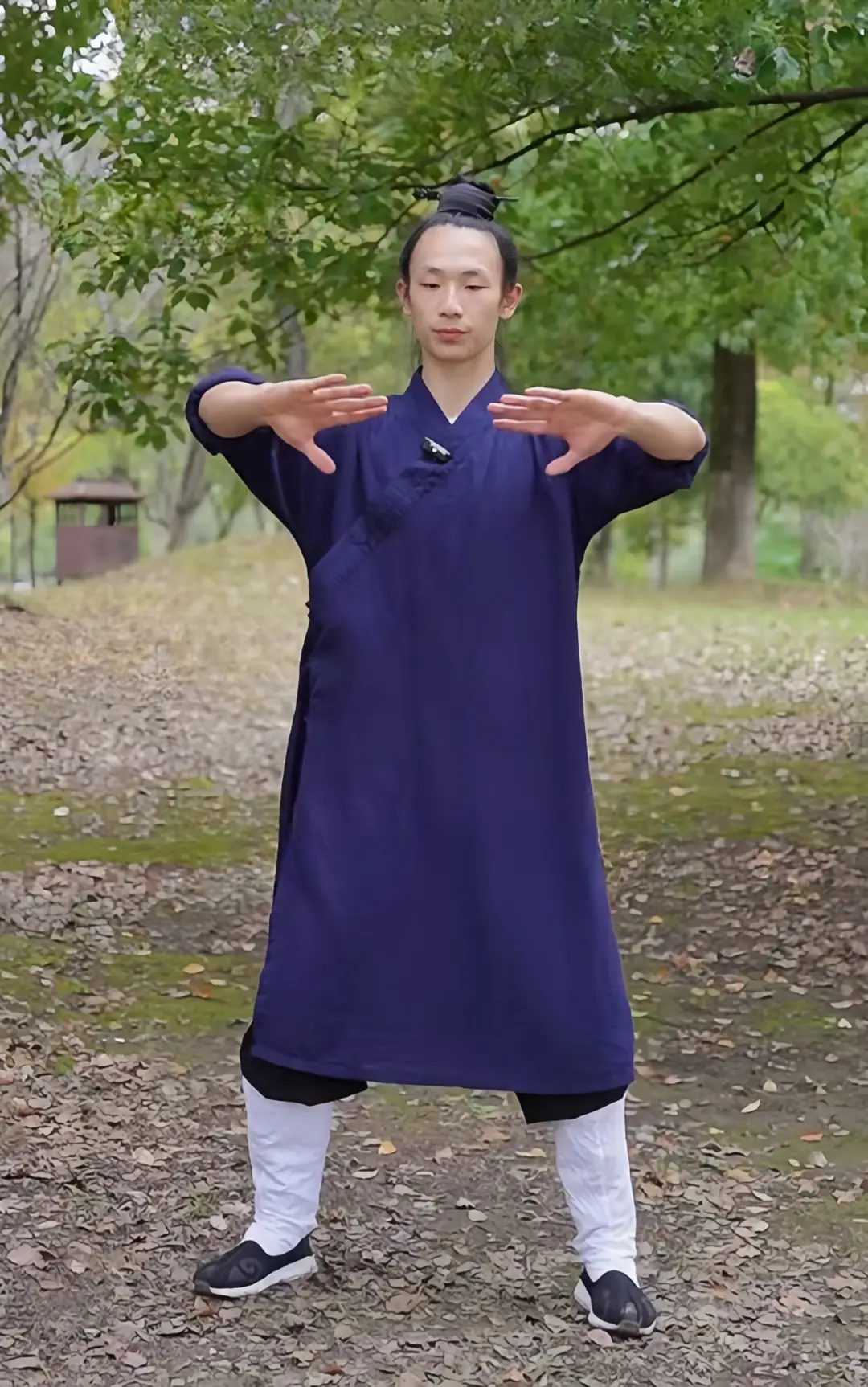
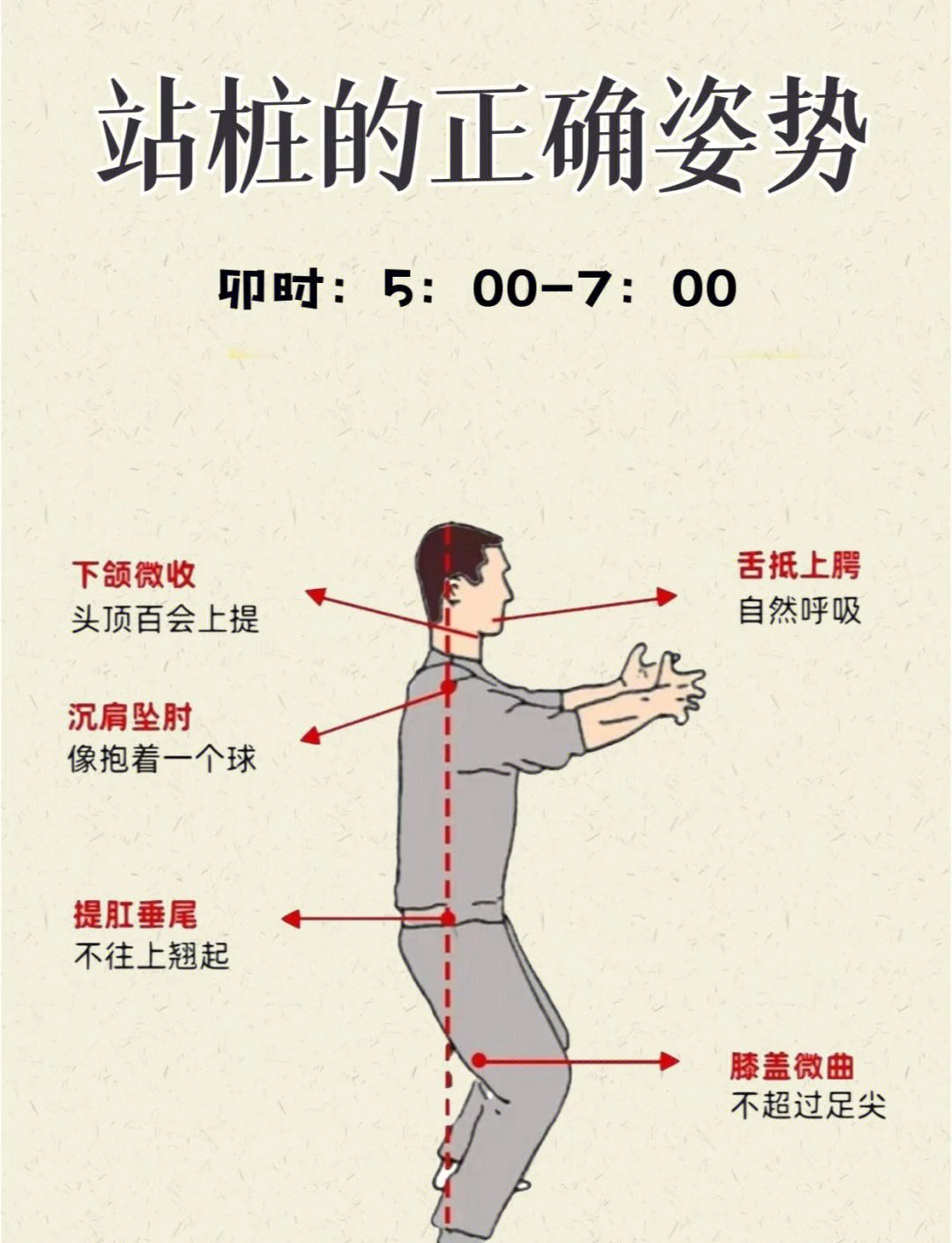
- Feet: Stand with feet parallel, shoulder-width apart. Don’t turn them out. Imagine your feet roots gently into the earth. Feel your entire foot sole in contact with the ground, with your weight centered—not on your heels, not on your toes.
- Knees: Let them soften and bend slightly. A crucial check: your knees should never poke forward past your toes. This protects your joints.
- The Golden Key – Your Hips (Kua): This is the master switch for relaxation. Visualize sitting back onto the edge of a tall, invisible bar stool. Feel your pelvis tilt slightly, your tailbone pointing down. This unlocks your thigh muscles and lets your weight sink solidly into your feet.
- Spine: Stand tall but don't military-stiffen. Gently tuck your chin. Imagine a gentle, invisible string lifting the crown of your head towards the ceiling, while your spine hangs relaxed like a heavy chain. No puffing your chest out, no slouching.
- Shoulders & Arms: Take a deep inhale and shrug your shoulders up to your ears. Now, exhale completely and let them drop. Really let go. Then, bring your hands up in front of your chest as if you're holding a large, delicate beach ball—this is the "Hun Yuan" posture. Elbows are slightly lower than hands, palms face your body. Feel a gentle, round expansion: the ball is too big to let your arms collapse, but too precious to squeeze.
Pillar 2: Turn Inward – Cultivating Quiet Awareness
Once your structure feels steady, the real work begins: calming the storm inside. This is "Tiao Xi Tiao Xin" – regulating breath and mind. Your goal is to transition from holding a position to inhabiting a state of relaxed alertness.
- Scan and Soften: Close your eyes if it helps. Start at the soles of your feet. Consciously tell those muscles to relax. Move up slowly—ankles, calves, knees, thighs. Unlock your hips again. Then address your belly, chest, and that big knot of tension in your shoulders and neck. Now, get tiny: relax your forehead, your jaw, your tongue, even the spaces between your fingers and toes.
- Befriend Your Breath: Don't force it deep or slow. Just observe it. Feel the cool air entering your nostrils and the warm air leaving. When thoughts about your to-do list pop up (and they will), don't fight them. Acknowledge them, then gently return your focus to the physical sensation of breathing in your lower abdomen.
- Use Your Imagination: Logic is restless; imagery is calming. Picture yourself standing under a tree in dappled sunlight, feeling warmth on your skin. Or imagine your limbs are submerged in a perfectly warm bath. These mental cues tell your nervous system it's safe to relax and let go.
Pillar 3: The Practice Mindset – Consistency Over Marathon Sessions
This is where most people stumble. They think, "30 minutes or bust!" and then burn out. Zhan Zhuang is nourishment, not an endurance test. You're cultivating energy (Qi), not burning it.
- Listen to Pain: Distinguish between "good" muscular fatigue and "bad" sharp joint pain. If you feel the latter, stop or adjust immediately. Dizziness or heart flutters? Gently end your session. There's no prize for suffering.
- Quality Trumps Quantity: Some days you'll feel grounded for 20 minutes. Other days, 5 minutes is a win. Honor that. A consistent 10-minute daily practice is infinitely more powerful than a 60-minute weekly struggle.
- Start Small and Grow: Begin with just 5-10 minutes per day. Set a timer, forget about perfection, and just stand. As your body and mind adapt over weeks, you'll naturally find yourself wanting to stay a little longer. Let the expansion be organic.
The Results: 3 Golden Signs You're Doing It Right
Here’s the beautiful part. You don’t need to constantly ask if you're improving. When you apply the three pillars consistently, your body and mind will send you clear, positive feedback. These are not goals to chase, but signposts that naturally appear on the right path.
1. Your Breath Becomes Effortless
You’ve likely heard about "deep, abdominal breathing" in meditation. In Zhan Zhuang, you don't force this. Instead, you create the conditions for it to happen by itself.
What it feels like: As your posture aligns and your muscles truly let go, a space opens up in your torso. Your diaphragm—the major breathing muscle—isn't cramped. You'll notice your inhalations and exhalations becoming longer, smoother, and finer without any effort on your part. In your most settled moments, you might even feel like you're not breathing at all; it's as if the air is moving through you on its own. This is a sign of superb internal relaxation and efficient structure.
2. Warmth Blooms in Your Hands and Feet
This is one of the most common and encouraging physical signs for beginners and seasoned practitioners alike.
What it feels like: After 10-15 minutes of correct, relaxed standing, you may feel a gentle warmth gathering in your palms and the soles of your feet. It might spread as a soothing heat wave through your limbs, or be accompanied by a subtle tingling or "electric" sensation. What's happening? This is a clear indicator of improved circulation (blood flow) and enhanced internal energy (Qi) reaching your extremities. Your relaxed state has allowed your vascular system to open up, nourishing your furthest points.
3. A Deep, Quiet Happiness Emerges
The mental shift is perhaps the most profound reward. You move from fighting boredom to enjoying deep peace.
What it feels like: The mental chatter doesn't just stop; it settles. Your thoughts become slower, clearer, and less sticky. A sense of calm well-being, even quiet joy, arises for no external reason. After your practice, you'll notice your mouth is moist, your mind feels refreshed (not tired), and you have a steady, calm energy. This is your nervous system moving out of "fight-or-flight" and into its "rest-and-digest" state—a sign of true mind-body harmony.
Embracing the Journey: It's Practice, Not Perfection
Let's be real. Some days will feel amazing. Other days, your mind will be a busy highway and your shoulder will refuse to relax. That's completely normal. Zhan Zhuang is a mirror, reflecting your current state—it's not about achieving a perfect pose every time.
Think of the sensations—even the shaky legs or impatient thoughts—as data, not failure. Your job is simply to observe them without judgment, adjust gently, and continue. This non-reactive awareness is the core of the practice.
You don't need advanced techniques. The magic is in the mastery of these fundamentals. By faithfully returning to Posture, Presence, and Patience, you transform simple standing into a powerful tool for health. You're not just building muscle; you're cultivating a resilient nervous system, balanced energy, and a mind that can find stillness anywhere.
Start small. Stand with intention. Feel your breath. Notice the warmth. Enjoy the quiet. Your practice has already begun.
Frequently Asked Questions About Tai Chi Standing Practice (Zhan Zhuang)
What exactly is Zhan Zhuang, and why should I practice it?
Zhan Zhuang, often called “stance training” or “standing meditation,” is a foundational practice in Tai Chi and internal arts. It involves holding a relaxed, aligned posture while cultivating mental stillness. Unlike dynamic exercises, it works from the inside out: by calming the nervous system and improving energy (Qi) flow, it builds a solid foundation for better health, mental clarity, and all your other Tai Chi movements.
I’m a complete beginner. How long should I stand each day?
Start incredibly small. We recommend just 5-10 minutes per day. Consistency is infinitely more important than duration. It’s better to practice for 10 minutes daily with good form and a relaxed mind than to force a 30-minute session that feels like a struggle. As your body and mind adapt over weeks, you’ll naturally feel comfortable extending your time.
What does it mean to “relax” in the stance? I still feel tension.
Great question! “Relax” here doesn’t mean going limp like a noodle. It means releasing unnecessary muscular tension so your skeleton, not your straining muscles, supports your posture. The key is in the hips (Kua)—imagining sitting back on a stool lets your thigh muscles relax. Systematic “body scans” to soften your shoulders, jaw, and even toes are also crucial. Some initial tension is normal; your awareness of it is the first step to letting it go.
Are the feelings of warmth and tingling normal?
Yes, absolutely. Experiencing warmth in the hands and feet, or a gentle tingling sensation, is one of the most common and positive signs that your practice is working. It indicates improved circulation and the smooth flow of internal energy (Qi) to your extremities, a direct result of proper alignment and deep relaxation. Enjoy it—it’s your body’s feedback!
My mind won’t stop wandering. Am I doing it wrong?
Not at all. A busy mind is the default state for most beginners—and it’s part of the practice! The goal isn’t to violently stop thoughts, but to gently notice them and return your focus to an anchor, like the feeling of your breath or the sensation in your feet. This act of noticing and returning is the training that builds mental calm over time. Be patient with your “monkey mind.”
Can I practice Zhan Zhuang if I have knee or back pain?
If you have existing injuries, always consult with a healthcare provider or a qualified Tai Chi instructor first. When practicing, the principle is to never push into sharp or joint-specific pain. For knee sensitivity, ensure your knees are softly bent and never extend past your toes. For the back, focus on the “sitting back” visualization to align your spine and avoid straining your lower back. Listen to your body; the practice should feel nourishing, not aggravating.